Updated for 2026. Scratching is normal cat behavior, and the animal-welfare groups we read all say the same thing: the goal is to redirect it, not to stop it. A cat that has the right thing to scratch, in the right place, will usually leave the couch alone. This guide covers why cats scratch, how to set up a scratcher your cat will actually use, how to make furniture less appealing while the new habit forms, and what not to do. Every point comes from a named organization, and we say which one. We do not recommend specific products here. For picks, see our best cat scratchers guide.
This is general information for cat owners, not veterinary advice. We have no in-house veterinary reviewer. If your cat’s scratching changes suddenly, mention it to your veterinarian.
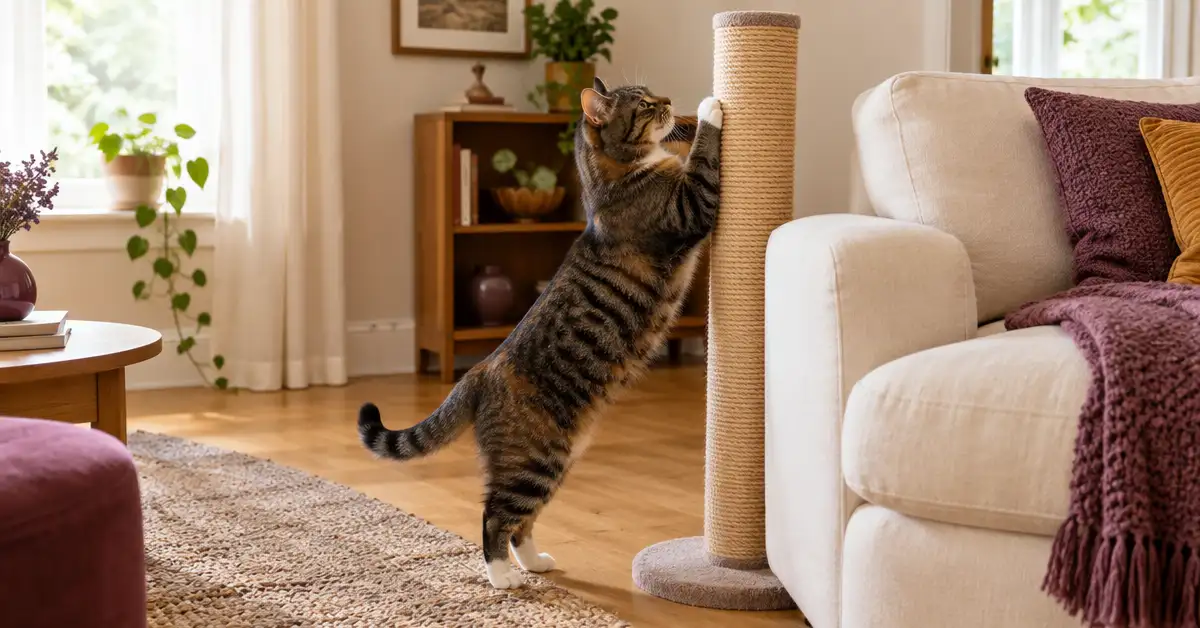
Why Cats Scratch (and Why They Pick the Couch)
The ASPCA lists the reasons: cats scratch during play, while stretching, and to mark territory. Because their claws need regular sharpening, they also scratch to remove frayed, worn outer claws and expose new, sharper ones. International Cat Care adds that scratching exercises the muscles of the front legs and spine, and that scratching leaves a scent message, because glands between the paw pads deposit a chemical mark when the claws drag down a surface.
That explains why scratching continues indoors. International Cat Care says cats still scratch inside the home to keep their claws in good condition and during exploration and play. Humane World for Animals makes the point from the cat’s side: cats do not think in terms of right or wrong, only in terms of meeting their needs. It describes the question your cat is asking as “Where do I prefer to scratch?” rather than “What do the humans prefer?”
The couch often wins because it fits what cats look for. Humane World says cats prefer to scratch tall, sturdy objects that let them dig their claws in and get a good grip, which is why they tend to pick furniture. International Cat Care puts the result bluntly: even if the amount of scratching is normal for your cat, if attractive scratching posts or areas are not provided indoors, damage will likely occur to furniture, wallpaper or carpet.
Redirect, Don’t Suppress
The ASPCA’s advice is that the best tactic is not to try to stop your cat from scratching, but to teach her where and what to scratch. International Cat Care agrees: scratching is a normal and necessary behavior, so you will not be able to stop it, but you can encourage your cat to scratch on a surface designed for the purpose. Claw trimming alone does not do this job. International Cat Care notes that trimming may help prevent immediate damage but does not meet the cat’s needs.
Choose a Scratcher Your Cat Will Prefer
A scratcher has to beat the couch, so it needs the qualities the couch has. The sources name these:
- Sturdy. The ASPCA says all cats want a sturdy post that will not shift or collapse when used. International Cat Care says some products are too lightweight to support scratching, and cats may not like them because they provide too little resistance and move around during use.
- Tall enough to stretch. The ASPCA says most cats like a post tall enough to stretch fully. International Cat Care says upright posts should be as tall as your cat is when standing on its hind legs in a full stretch. Humane World says most cats prefer a post at least 32 inches tall that will not wobble, made of sisal rope.
- The right surface. The ASPCA suggests offering a variety, such as cardboard, carpet, wood, sisal and upholstery, and notes that some cats prefer a vertical grain for raking while others favor a horizontal grain for picking. Humane World lists sisal, corrugated cardboard and wood as good surfaces.
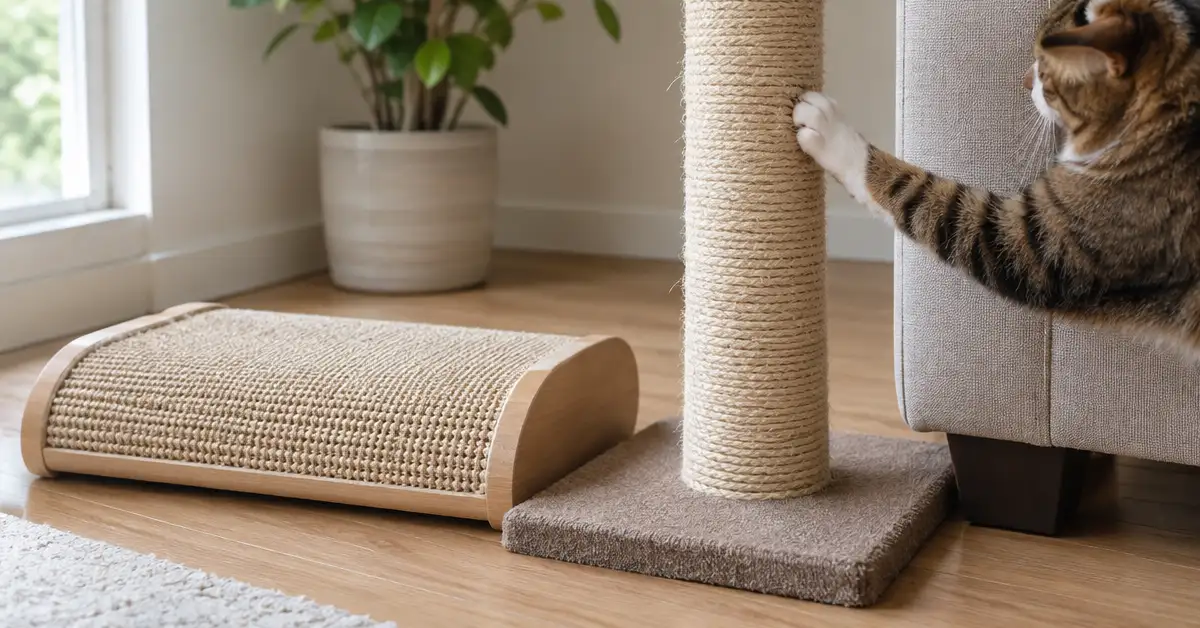
- The right orientation. The ASPCA says some cats prefer horizontal posts, others vertical or slanted ones. Humane World says that if your cat scratches horizontally, you can lay a vertical post on its side or use a sturdy horizontal scratcher. International Cat Care says kittens and senior cats might prefer softer surfaces such as large angled or horizontal cardboard scratchers, because they offer less resistance.
- A match for what the cat already scratches. International Cat Care gives an example: if your cat scratches textured wallpaper at a certain height, the alternative should be vertical, with similar texture and ridges, and reach to the same level.
Once you learn what your cat prefers, the ASPCA suggests providing more posts of that kind in various locations. For what to look for when you buy, see our best cat scratchers guide. If you want a larger structure with scratching surfaces built in, see our guides to cat trees for large cats and cat trees for multiple cats.
Put It Where Your Cat Already Scratches
Location matters as much as the post itself. Humane World says to place the scratching post in a location where the cat wants to scratch: next to the couch if your cat scratches the couch, near the front door if your cat scratches the wall there when you come home. The ASPCA gives the same advice for furniture you are protecting, and says to place scratching posts next to those objects as “legal” alternatives. International Cat Care adds that cats often scratch after sleeping, so a post near a favorite bed can help, and that the post works best in an area where your cat spends a lot of time.
Help Your Cat Find the New Scratcher
A cat does not know a new post is for scratching. The sources suggest several ways to introduce it:
- Play around it. Humane World says the easiest way is to play with your cat near the post, with a fishing-rod toy for example, so the cat interacts with it in the middle of play. International Cat Care suggests a simple predatory-type game around the base with a wand toy, and says once the claws contact the surface that is often all that is needed.
- Use catnip. The ASPCA suggests scenting the post with catnip, hanging toys on it and placing it where your cat will be inclined to climb on it. Humane World suggests rubbing catnip on the post for the first several days. International Cat Care notes catnip draws attention for cats who are sensitive to it.
- Reward use. International Cat Care suggests placing treats around the base or on top of the post, and rewarding your cat with treats or gentle praise when it uses it.
One thing all three sources warn against: never pick your cat up and rub or drag its paws on the post. The ASPCA says this could seriously frighten your cat and teach her to avoid the post completely. Humane World says it can create a stress response in some cats and lead them to avoid the post. International Cat Care says it could frighten your cat, put you at risk of injury and damage your bond.
The ASPCA also says not to throw away a favorite post when it becomes unsightly. Cats prefer shredded and torn objects because they can really get their claws into the material, and a used post looks and smells familiar.
Make the Furniture Less Appealing, Temporarily
While your cat works out that the new post is better, the sources recommend making the old target less attractive, always alongside the new scratcher and never instead of it. Humane World frames this as temporary: once your cat is consistently using the post, you can remove the covering.
- Cover it. Humane World says the easiest and most effective solution for furniture is a tight-fitting sheet, which is much less desirable to scratch than sisal. International Cat Care suggests a thick, heavy blanket or one-sided sticky plastic film.
- Make it sticky, smooth or slick. Humane World suggests double-sided sticky tape for smaller surfaces. The ASPCA lists plastic, double-sided sticky tape, sandpaper or an upside-down vinyl carpet runner with the knobby side up, on furniture or on the floor where your cat would stand to scratch.
- Remove or turn away. The ASPCA suggests removing or covering other desirable objects, such as turning speakers toward the wall.
If wooden furniture or a stair carpet is the target, International Cat Care suggests offering a suitable wooden post or scratching panel near the damaged area, or placing a section of old or sample carpet near the stairs for cats that scratch the lower step while lying down.
What Not to Do
International Cat Care is direct: your cat should never be punished. If the motivation is claw maintenance or communication, you are punishing a natural behavior, which is confusing for the cat, and it says punishment can add to a cat’s distress and probably make things worse. The ASPCA says that startling a cat with a clap or a squirt of water should be a last resort at most, because your cat may associate you with the startling event and learn to fear you.
Routine Nail Care
The ASPCA lists regular nail clipping as part of managing scratching, and points owners to its nail care guidance. If you have never trimmed a cat’s nails, a vet or groomer can show you how.
Homes With More Than One Cat
International Cat Care recommends one scratching post per cat, plus an additional one for choice, positioned in different locations. If space is tight, it says scratching panels can be fixed to walls. Our guide to cat trees for multiple cats covers larger shared structures. If a new kitten is joining your household, our new kitten checklist covers setting up a scratching post in the first week.
Frequently Asked Questions
How We Researched This and Sources
This page draws on guidance from the ASPCA, Humane World for Animals and International Cat Care. We read each source and describe what it says. We do not give medical advice and we do not recommend products on this page. Michael Probert, our author, writes from research, not clinical or veterinary expertise, and we have no in-house veterinary reviewer. Full editorial policy: How We Choose. For more on furniture and gear, see our cat gear guide.
Sources: ASPCA, Destructive Scratching, Humane World for Animals, Stop Cats From Scratching Furniture With a Scratching Post and International Cat Care, Scratching on Furniture and Carpets.