Updated for 2026. A cat tree built for an average 9–10 lb cat is a real hazard for a 15–20 lb Maine Coon, Norwegian Forest Cat, or Ragdoll: a big cat lands with far more force than its resting body weight suggests, and a narrow base or thin post that’s fine for a smaller cat can wobble, tip, or fail under a large cat’s weight. Below, we cover 10 verified cat trees and towers across the formats that matter for big cats specifically: extra-sturdy freestanding trees, floor-to-ceiling tension towers for small floor space, senior-accessible low condos, and multi-cat towers with separated perches.
We lead with the physics and the manufacturer’s own numbers — base footprint, published weight capacity (or its absence), platform and condo dimensions — rather than a generic “best cat tree” list built around looks. If you’re building out a full gear list, see our cat gear guide; if your cat is more interested in clawing than climbing, see our best cat scratchers & scratching posts guide.
How We Chose
Every product below was checked against its manufacturer or major-retailer listing (Chewy, Amazon, Petco) for current availability, published dimensions, and stated weight guidance before inclusion. We cross-referenced specs across at least two independent listings where possible, and our October 2026 search of the US Consumer Product Safety Commission (CPSC) recall database found no recall for any cat tree recommended below. Most cat tree manufacturers do not publish a numeric maximum weight capacity for the whole structure; where a listing specified one (per-cat or per-platform), we’ve stated it exactly, and where it doesn’t exist, we say so plainly rather than estimating. Full policy: How We Choose.
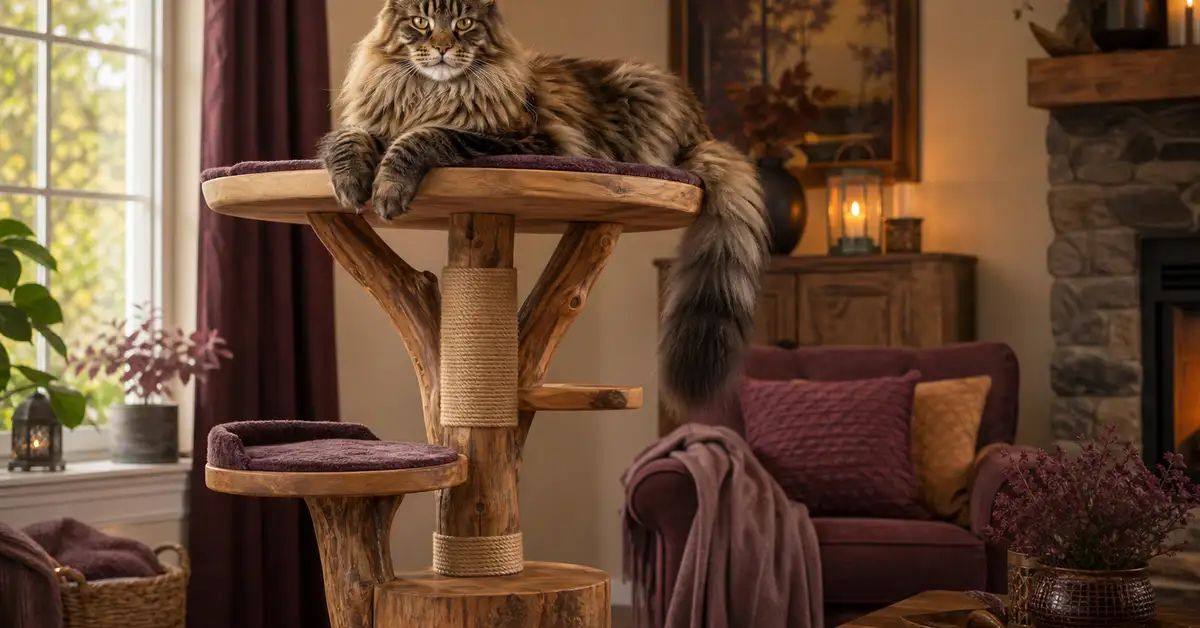
Weight and Stability: What Actually Keeps a Big Cat’s Tree From Tipping
A cat tree’s stability comes down to a handful of physical factors, and base footprint is the biggest one. A tree with a wide, heavy base relative to its height has a large “support polygon” — the tree’s center of mass can shift a long way before the structure tips — while a tall, narrow tower concentrates its mass over a small floor area and tips more easily under a lateral push, such as a large cat landing hard on an outer perch. The Frisco 76-in XXL tree below illustrates this well: its baseboard is roughly 23.5 by 23.5 inches under a 36.5-by-35-inch overall footprint, which is a genuinely wide base for the tree’s height.
Mass and post thickness matter too. A heavier tree is harder to tip because there’s more inertia resisting the motion, and thicker posts resist bending and twisting when a large cat digs in to scratch or pushes off to jump. Sisal, jute, and carpet coverings affect grip and claw health, but contribute little to a tree’s structural stability compared with the core board thickness and the base footprint — don’t assume a “heavy duty” fabric label means a heavy-duty frame.
Manufacturers increasingly respond to this with two concrete features: a genuinely wide, often reinforced base, and an optional or included anti-tip kit (a wall strap or anchor) that ties the tree to a stud. For a large or highly active cat, using the anchor isn’t optional caution — it materially changes the failure mode from “tips over” to “doesn’t move.”
Floor-to-Ceiling Tension Towers vs. Freestanding Trees
Floor-to-ceiling towers use a threaded or spring-loaded rod that presses against the ceiling, putting the whole structure into compression between floor and ceiling rather than relying on a wide base. Done correctly, on a solid ceiling, this can be very stable and it uses a fraction of the floor space of a wide freestanding tree — a real advantage in a small apartment. The tradeoff is that stability now depends heavily on installation: an under-tightened rod, a soft or damaged ceiling surface, or an off-center load from a large cat landing on an outer platform can all reduce the tower’s real-world stability well below its on-paper design. If you’re not confident about your ceiling material or your ability to tension the rod correctly and re-check it periodically, a heavy-base freestanding tree with an anchor strap is the more forgiving choice for a genuinely large cat.
Condo and Perch Sizing: The Spec Most Buyers Skip
A “large cat” cat tree’s marketing doesn’t always translate into a large cat actually fitting comfortably. Condo openings sized for an average cat can be a tight squeeze for a Maine Coon’s shoulders, and a narrow perch means a big cat’s paws hang over the edge rather than resting flat. Where manufacturers publish condo and perch dimensions — not every one does — we’ve included them below so you can compare against your own cat’s size rather than trusting the word “large” on the box.
Senior and Multi-Cat Considerations
Cornell’s Feline Health Center and the ASPCA both frame vertical space as a genuine welfare need, not just a nice-to-have: elevated perches let cats survey their territory, retreat from housemates, and get exercise they’d otherwise miss indoors. For a senior large cat, though, a tall multi-level tower with big jumps between platforms can work against that goal — older or heavier cats that find climbing hard do better with a lower tree, closely spaced levels, and wide, easy-access perches rather than the tallest available option. For multi-cat homes, the priority shifts to separated resources: two or more perches at different heights so cats aren’t forced to compete for the one good spot, which is where multi-level towers with distinct condos and platforms earn their higher price. This is general guidance, not veterinary advice — if your cat has a diagnosed mobility condition, talk to your vet about what height and access level is appropriate.
Sisal, Carpet, or Plush — Does It Matter Here Too?
The same material logic from our scratchers guide applies to the scratching posts built into a cat tree: sisal rope holds up far longer under a large cat’s claws than carpet, and a carpet-wrapped post can send the same mixed signal about what’s acceptable to scratch elsewhere in the house. Most of the sturdier trees below use sisal specifically on the scratching posts, with plush or faux-fur fabric reserved for platforms, condos, and resting surfaces where grip matters less than comfort.
Transparency first: This guide contains affiliate links. If we’re enrolled in an affiliate program, we may earn a commission at no extra cost to you — it never affects how we research or rank. Read our full affiliate disclosure policy.
1. Frisco 76-in XXL Heavy Duty Cat Tree, Cream — Best Overall for Large Cats
What it is: A 76-inch freestanding multi-level tree with a wide, square baseboard, two condos, and two padded top perches, with a full published dimensional table on its Chewy listing.
Best for: Owners who want the most thoroughly documented large-cat tree on the market — every condo, opening, and perch dimension is public.
Specs: Fully assembled 36.5″ L x 35″ W x 76″ H; baseboard 23.5″ x 23.5″. Condo 1: 15.5″ x 13.75″ x 11.75″, opening 7.825″ x 9.125″. Condo 2 (larger): 22″ x 15.725″ x 15.725″, opening 7.875″ x 9″ — comfortably fits a long-bodied breed stretched out. Perch 1: 16.25″ x 16.25″. Perch 2: 23.5″ x 13.25″. Engineered-wood core, sisal-wrapped posts, removable machine-washable perch covers.
Manufacturer weight capacity: Not published as a number. Chewy states the tree is “tested to ensure standalone stability” and sells optional wall anchors for extra security — we’d use them for any cat over about 15 lb.
Pros: The widest, most fully specified base on this list; two genuinely large condo options; optional wall anchoring.
Cons: No numeric weight rating to compare against other trees; large floor footprint (36.5″ x 35″) needs real floor space.
Price band: $$ (mid-range)
Evidence: Manufacturer/retailer listing, Chewy.
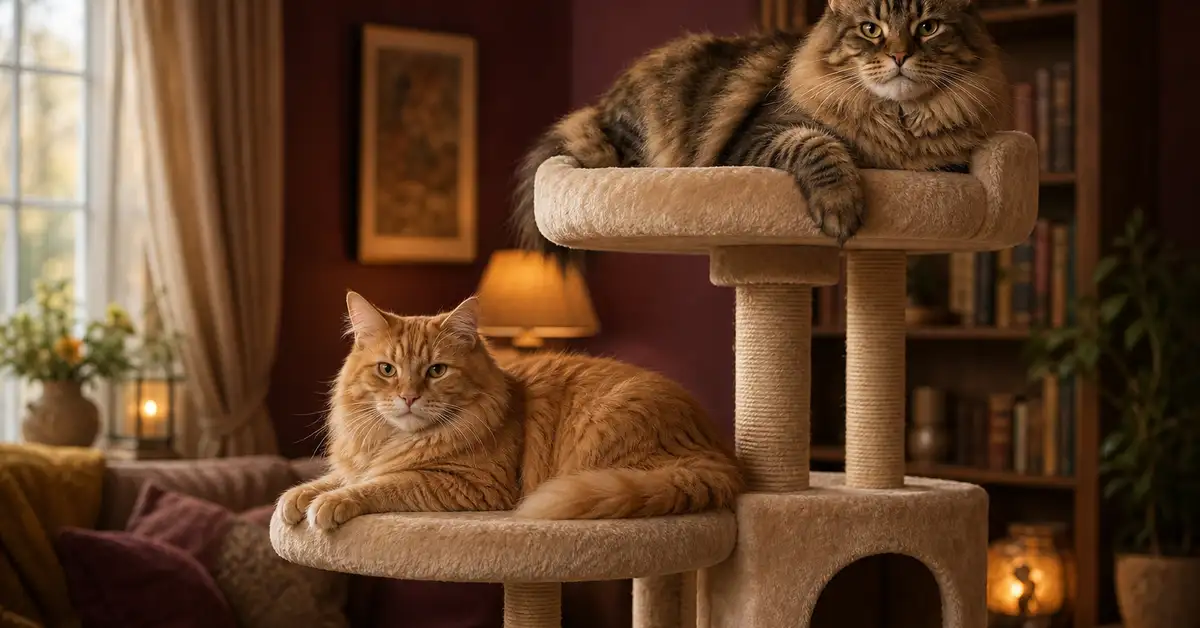
2. Feandrea 81.1-Inch Large Cat Tower, Multi-Level Plush Condo (UPCT190G01) — Best for Multi-Cat Households
What it is: An 81.1-inch, 5-level tower with two perches, two caves, a basket, and a hammock, built with a reinforced base and an included anti-tip kit.
Best for: Multiple cats sharing one tower — this is one of the only trees on this list with an explicit multi-cat weight rating.
Specs: 23.6″ L x 19.7″ W x 81.1″ H, product weight 51.8 lb. Five levels with 12–16-inch spacing between them (short jumps, easier for less agile cats). Particleboard core, sisal-wrapped posts, plush fabric.
Manufacturer weight capacity: Explicitly published — rated for up to 6 cats at a maximum of 15.4 lb each, with a maximum combined static load of 165 lb across the whole structure. Individual cats well over 15.4 lb are outside the manufacturer’s stated design range.
Pros: A genuine, named weight figure to plan around rather than guesswork; short level-to-level spacing suits less agile cats; anti-tip kit included, not sold separately.
Cons: The 15.4 lb per-cat figure is modest for the biggest Maine Coons; narrower base (19.7″) than the Frisco XXL relative to its height.
Price band: $$ (mid-range)
Evidence: Manufacturer/retailer listing, Amazon.
3. Gitelsnour Maine Coon Cat Tree, Heavy Duty Cat Tower for 20 lb+ (GCT033G) — Best for Maine Coons
What it is: A 70-inch heavy-duty tower marketed specifically for cats over 20 lb, with two large condos, two hammocks, a wide top perch, and 15 sisal scratching posts.
Best for: Owners of genuinely giant breeds who want a tower named for their exact use case rather than a generic “large cat” label.
Specs: Base 27.6″ L x 17.7″ W, overall height ~70″. Top perch 23.6″ L x 11.8″ W (removable). Condos approximately 15.7″ L x 17.7″ W. Product weight ~48.9 lb — a heavy, ballast-heavy build. Anti-tip wall strap included.
Manufacturer weight capacity: No numeric per-cat or per-platform figure published. The “20 lb+” designation in the product name is qualitative, describing intended use rather than a tested maximum — treat it as a design target, not a certified rating.
Pros: Purpose-named for the exact large-breed audience; heavy base and product mass genuinely resist tipping; 15 scratching posts is unusually generous.
Cons: “20 lb+” is marketing language, not a tested number; base is narrower front-to-back (17.7″) than the Frisco XXL.
Price band: $$ (mid-range)
Evidence: Manufacturer/retailer listing, Amazon.
4. PAWZ Road 72-Inch Cat Tower for Large Cats — Best for Extra-Large Condo Space
What it is: A 72-inch tower built around a steel-framed hammock and a large condo, with 7 sisal-wrapped scratching posts and a dual top perch.
Best for: Chunky, heavy-bodied cats who need the hammock itself to hold real weight without sagging or tearing.
Specs: Hammock approximately 20″ x 16″ on a steel support frame (most competitors use fabric-only hammocks). 7 sisal-wrapped scratching posts. Dual top perch and a large enclosed condo.
Manufacturer weight capacity: No published maximum for the whole tree. The listing notes the condo comfortably fits cats in the 15–20 lb range (citing Maine Coon and Ragdoll by name), but does not extend that figure to the hammock or perches individually.
Pros: Steel-reinforced hammock is a genuine upgrade over fabric-only designs for a heavy cat; named large-breed condo sizing.
Cons: No whole-tree weight rating; base footprint not published, so measure your space before assuming it will fit.
Price band: $$ (mid-range)
Evidence: Manufacturer/retailer listing, Amazon.
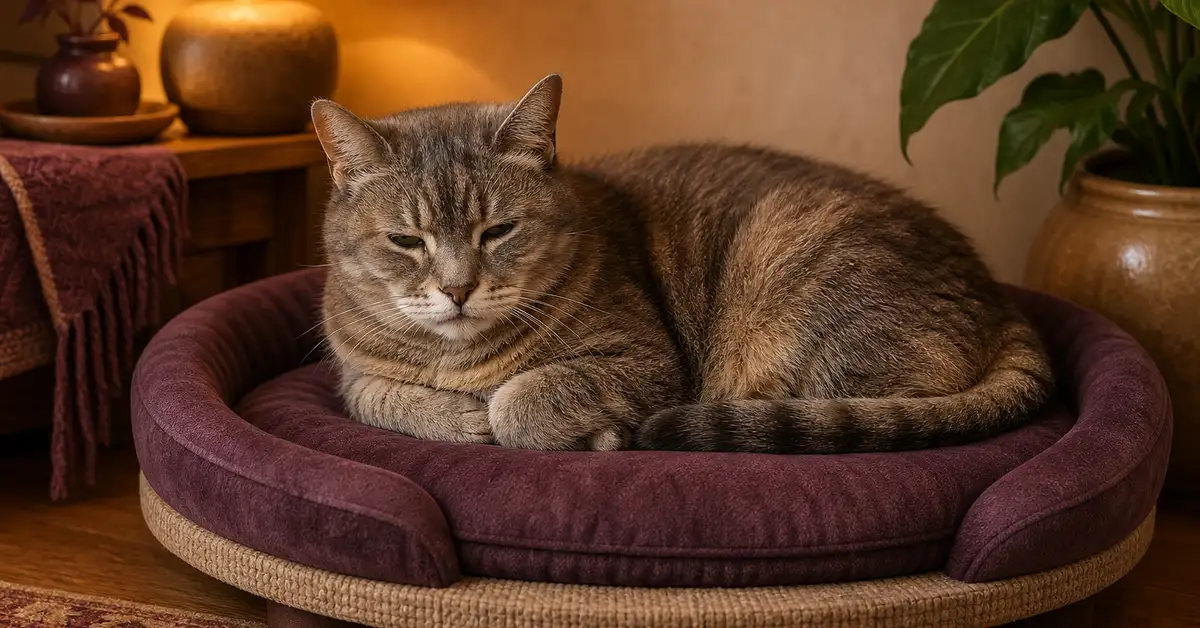
5. Feandrea Cat Tree, 33.1-Inch Cat Tower for Large Cats up to 16 lb (UPCT61W) — Best for Senior Large Cats
What it is: A compact, 33.1-inch condo with one large perch, two enclosed caves, and a single scratching post — all reachable without a serious climb.
Best for: Older or less mobile large cats who still want vertical resting spots but shouldn’t be jumping to a 70-plus-inch top perch.
Specs: 23.6″ L x 15.7″ W x 33.1″ H, product weight 18.3 lb. Large top perch approximately 22″ x 15.7″ with padded raised edges. Two caves (upper cave has two doors for easy in-and-out access). Particleboard core, plush fabric, sisal-wrapped post. Anti-tip kit included.
Manufacturer weight capacity: Explicitly named in the product title — “for large cats up to 16 lb.” No further per-platform breakdown is published beyond that single figure.
Pros: Genuinely low first-step and platform heights suit reduced mobility; the two-door upper cave is a thoughtful accessibility detail; explicit 16 lb rating removes guesswork.
Cons: 16 lb is below the weight of many full-grown Maine Coons; only one scratching post and one climbing tier, so it’s a resting station more than an activity center.
Price band: $ (budget)
Evidence: Manufacturer/retailer listing, Amazon.
6. EveryYay Cozy Condo 6-Level Cat Tree for Large Cats — Best for Households With Several Cats
What it is: A 66.1-inch, six-level tower from Petco’s house brand with four jute-wrapped scratching posts, two enclosed condos, and a removable, machine-washable bed at the top.
Best for: Multi-cat homes wanting several distinct levels so cats aren’t all competing for the same top spot.
Specs: 66.1″ H, product weight 44.31 lb. Six levels, four jute-wrapped scratching posts, two condos, one removable/washable bed. Jute is a coarse natural fiber similar to sisal, and it’s specifically named on this listing rather than a generic “rope-wrapped” description.
Manufacturer weight capacity: Not published. The “for Large Cats” naming and the tower’s 44+ lb own product weight (indicating substantial materials) are the only signals available — there is no numeric per-cat or per-platform figure on the listing.
Pros: Six distinct levels genuinely help spread out a multi-cat household; the removable washable top bed is easy to keep clean and can be padded for an older cat’s comfort.
Cons: No published weight rating at all, unlike the two Feandrea models above; base footprint dimensions aren’t listed, so confirm floor space before buying.
Price band: $$ (mid-range)
Evidence: Manufacturer/retailer listing, Petco.
7. Frisco 65-in XXL Heavy Duty Cat Tree, Cream — Best Slightly Smaller Alternative
What it is: The shorter sibling of our top pick, sharing the same heavy-duty design language at 65 inches instead of 76, for rooms with lower ceilings or less floor space.
Best for: Buyers who want the Frisco XXL build quality and reputation but don’t need — or can’t fit — the full 76-inch version.
Specs: 65-inch overall height (11 inches shorter than pick #1), same “XXL Heavy Duty” product line and construction approach: engineered-wood core, sisal-wrapped posts, multiple condos and perches. Individual condo/perch dimensions were not separately published for this shorter variant at the time of this update.
Manufacturer weight capacity: Not published, matching the 76-inch model — Chewy’s general stability language (“tested to ensure standalone stability,” optional wall anchors) applies across the product line rather than a per-model number.
Pros: Same trusted product line as our Best Overall pick at a lower height and (typically) lower price; strong review volume for the Frisco XXL line generally.
Cons: Less dimensional detail published for this specific height variant than for the 76-inch version; still no numeric weight rating.
Price band: $$ (mid-range)
Evidence: Manufacturer/retailer listing, Chewy.
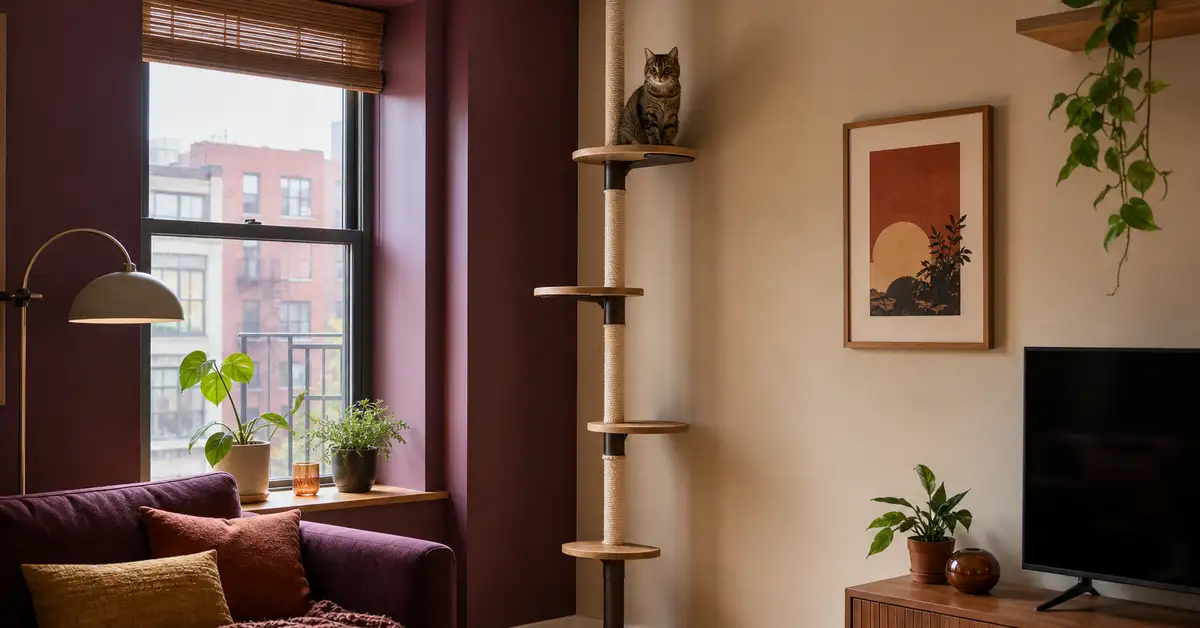
8. TRIXIE Kobe Cat Tree, 4-Level Floor-to-Ceiling (90.5″–104″) — Best Budget Floor-to-Ceiling
What it is: A four-level, tension-mounted tower that spans floor to ceiling on an adjustable rod, with jute scratching posts and a plush padded bed.
Best for: Small apartments where floor space is the real constraint and ceiling height can be put to work instead.
Specs: Adjustable 90.5″–104″ ceiling mount, base footprint approximately 9.8″ x 17.3″, product weight 20.9 lb. Materials: MDF core, plush (polyester) platforms, jute scratching posts. Secures via an expandable tension rod, with optional wall-mounting hardware included for extra security.
Manufacturer weight capacity: Published, and worth reading carefully — TRIXIE states a 12 lb weight capacity. That is meaningfully below the weight of many large-breed cats, so we’re including this tower specifically as a budget-friendly secondary perch or for the lighter end of the “large cat” range, not as a primary structure for a 15–20+ lb Maine Coon.
Pros: Genuinely tiny floor footprint (about the size of a dinner plate); published weight capacity, unlike most trees on this list; wall-mount hardware included as a backup to the tension rod.
Cons: The 12 lb capacity is a real limitation for genuinely large cats — don’t rely on this as the only tree in a heavy-cat household; stability depends on correct rod tensioning and a sound ceiling.
Price band: $ (budget)
Evidence: Manufacturer/retailer listing, Chewy.
9. Cat Craft Slim 5-Tier Floor-to-Ceiling Cat Tower (98″–110″) — Best Space-Saving Design
What it is: A slim, five-tier tension-mounted tower with a hammock, sisal scratching posts, platforms, and hanging toys, built for a narrow footprint.
Best for: Corners and tight spaces where even the TRIXIE Kobe’s small base is more than you can spare.
Specs: Adjustable 98″–110″ ceiling mount. Overall product dimensions approximately 16.93″ x 10.63″ x 108″ (packaged/assembled envelope), product weight 17.63 lb — noticeably lighter than the TRIXIE Kobe, which affects how much the tension rod alone is doing the stability work. Five tiers including a hammock and multiple platforms.
Manufacturer weight capacity: Not published on the listing we reviewed. Given the light overall product weight and slim footprint, we’d treat this as a supplementary or single-moderate-cat structure rather than a primary tower for the heaviest large breeds, absent a stated figure.
Pros: Very slim footprint, genuinely space-saving; five tiers gives more vertical variety than most floor-to-ceiling competitors at this size; hanging toys add play value.
Cons: No published weight capacity; lighter overall build than the TRIXIE Kobe, so installation quality matters even more.
Price band: $ (budget)
Evidence: Manufacturer/retailer listing, Amazon.
10. EveryYay Cozy Condo 5-Level Cat Tree for Large Cats (54.7″ H) — Best Compact Multi-Level Option
What it is: The shorter, five-level sibling of pick #6, at 54.7 inches instead of 66.1 — the same Petco house-brand design scaled down for lower ceilings or a gentler climb.
Best for: Households that want the multi-condo, multi-level layout of the 6-Level model but with a lower top platform — a reasonable middle ground between a full-height tower and the low senior-focused Feandrea 33.1-inch condo above.
Specs: 54.7″ H (11.4 inches shorter than the 6-Level version). Same general construction family: multiple levels, enclosed condo space, jute-style scratching posts, named for large-cat use.
Manufacturer weight capacity: Not published, consistent with the 6-Level model in the same line.
Pros: Lower top perch than most trees on this list, reducing jump height while still offering multiple levels; shares a proven design family with pick #6.
Cons: Detailed base and platform dimensions weren’t separately published for this shorter variant; no weight rating, same as its taller sibling.
Price band: $$ (mid-range)
Evidence: Manufacturer/retailer listing, Petco.
Frequently Asked Questions
Methodology & Sources
This guide draws on manufacturer and major-retailer specifications (Chewy, Amazon, Petco) checked for current availability and published dimensions before inclusion, cross-referenced across independent listings where possible. Stability and physics claims draw on manufacturer product documentation and Catastrophic Creations’ published comparison of wall shelves, cat trees, and towers. Behavioral guidance on vertical space, senior accessibility, and multi-cat resource distribution is drawn from Cornell University’s Feline Health Center and the ASPCA’s professional resources on vertical space for cats. Our October 2026 search of the US CPSC recall database found no recall for any cat tree recommended above; this is a point-in-time recall check, not a guarantee against future recalls. Michael Probert, our author, is a longtime multi-cat owner writing from research and lived experience, not clinical or veterinary expertise — see our About page. We have no in-house veterinary reviewer. Full editorial policy: How We Choose.
Sources: Cornell Feline Health Center, ASPCApro, How To Create Easy Vertical Space for Cats, Catastrophic Creations, Cat Shelves vs Cat Trees vs Cat Towers, and manufacturer/retailer listings linked throughout.
See our full cat gear guide for everything else a new cat parent needs, and our best cat scratchers & scratching posts guide if scratching — not climbing — is the more urgent problem.