Updated for 2026. Cats scratch because they need to — not because they’re being difficult. The question isn’t how to stop it, it’s how to give your cat something better to scratch than your couch. Below, we cover 12 verified scratchers and scratching posts across the five formats that actually matter: couch and furniture protectors, tall sisal posts, cardboard pads, wall and floor mats, and one multi-cat tower for households that want a single anchor piece.
We lead with the long-tail specialist picks — sisal posts tall enough for a full stretch, corner protectors sized to a real sofa arm, cardboard pads that don’t fall apart in a week — rather than chasing the generic “best cat scratcher” search that big review sites already own. If you’re building out a full gear list, see our cat gear guide.
How We Chose
Every product below was checked against its manufacturer or major-retailer listing page (Amazon, Chewy, Petco) for current availability, material, and dimensions before inclusion. We cross-referenced specs across at least two independent listings where possible, and we ran a safety check against the U.S. Consumer Product Safety Commission’s recall database — no recalls were found for any brand or product covered here as of this update. We did not find a manufacturer-stated weight limit or age restriction for most items in this category; where a listing specified one, we’ve noted it. Full policy: How We Choose.
Why Do Cats Scratch?
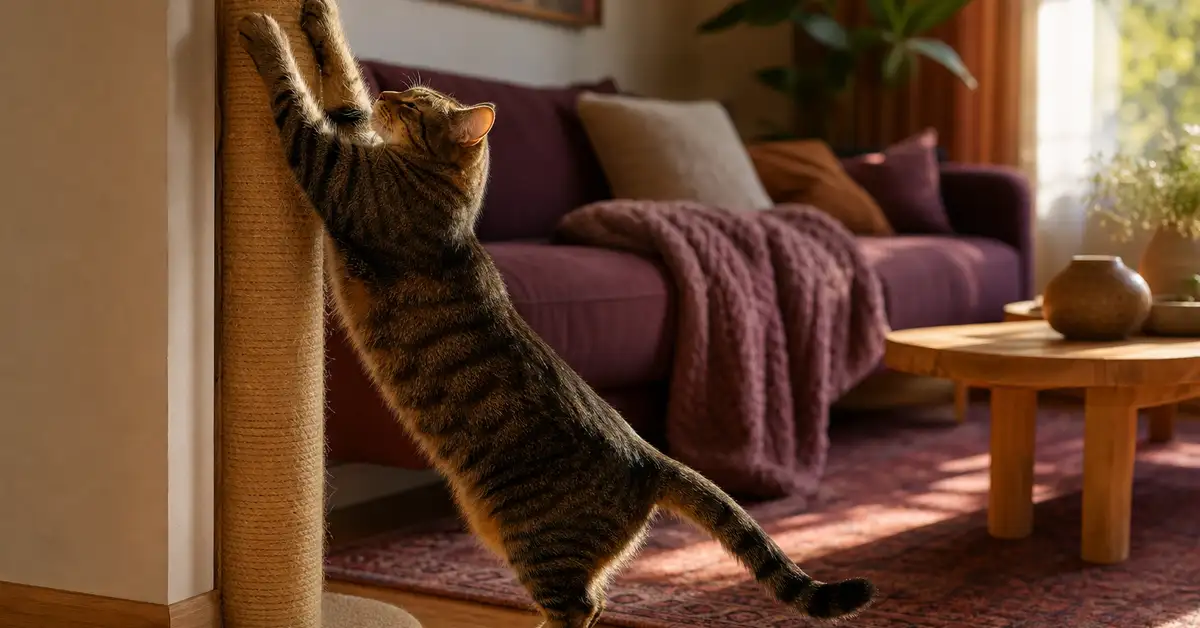
Scratching isn’t destructive behavior gone wrong — it’s a normal, necessary part of being a cat. The ASPCA explains that cats scratch during play, while stretching, to mark territory or signal other cats, and because their claws need regular conditioning: scratching removes the frayed, worn outer sheath from each claw to expose a new, sharper one underneath. Cornell University’s Feline Health Center similarly describes scratching as largely a marking behavior, depositing scent from glands in a cat’s paws onto whatever they scratch. VCA Animal Hospitals adds a third function: scratching gives a cat an effective, whole-body stretch, engaging muscles they’d otherwise get from climbing and hunting.
Because scratching meets several real needs at once, the ASPCA’s own guidance is direct: don’t try to stop your cat from scratching. Teach them where and what to scratch instead, by making appropriate posts and pads more appealing than your furniture.
Vertical, Horizontal, or Both? And Does Material Matter?
Cats don’t all scratch the same way. The ASPCA notes that some cats prefer horizontal posts, others vertical or slanted ones, and that preference often splits by grain direction too — some cats favor a vertical grain for raking motions, others a horizontal grain for picking. Their practical advice is to offer a variety of surfaces (cardboard, carpet, wood, sisal, upholstery) and multiple orientations, then notice what your cat actually uses.
Material tends to sort by what a cat wants out of the motion. Sisal rope and woven sisal fabric give firm, springy resistance, which suits cats that stretch upward and dig in with their whole body weight — it’s also markedly more durable than other common materials, which is why most dedicated vertical posts are sisal-wrapped. Corrugated cardboard lets a cat really tear into it and shred, which some cats clearly enjoy more than the resistance of sisal, at the cost of needing replacement sooner. Carpet is the one material worth a specific caution: because it looks and feels like your actual floor or furniture, a carpet-covered scratcher can send a mixed signal about what’s fair game to claw in the rest of the house. It’s not automatically the wrong choice, but if your cat is already testing the boundaries of your real carpet, a sisal or cardboard surface draws a clearer line.
Base Stability: The #1 Reason a Scratcher Gets Ignored
A post that wobbles, tips, or shifts when scratched gets abandoned fast — cats want to put real force into scratching, and an unstable base makes that feel risky rather than satisfying. The ASPCA’s guidance is blunt on this point: cats want a sturdy post that won’t shift or collapse when used. In practice, that means checking two things before you buy a vertical post: base footprint relative to post height (a 32-inch post needs a wide, heavy base, not a narrow one), and construction quality at the base-to-post joint, since that’s where cheap posts fail first. Several of the sisal posts below specify a footprint in the range of 16 inches square for a 32-inch post, which is a reasonable ratio to compare other tall posts against.
A Note on Declawing
Scratching problems are solvable without surgery, and every major veterinary body that has taken a position on declawing says so directly. The American Veterinary Medical Association’s policy says the AVMA strongly discourages declawing when it isn’t medically necessary — talk to your vet if you are weighing it. The ASPCA’s position statement goes further: the organization is strongly opposed to declawing, does not perform the procedure, and notes that declawing has not been proven to improve behavioral issues like aggression — meaning it isn’t even an effective fix for the scratching problem it’s sometimes proposed to solve. If scratching has become a real conflict in your home, the fix is more and better scratching surfaces, placed where your cat already wants to scratch, not surgery. This is general information, not veterinary advice; talk to your vet about your specific cat’s behavior.
Transparency first: This guide contains affiliate links. If we’re enrolled in an affiliate program, we may earn a commission at no extra cost to you — it never affects how we research or rank. Read our full affiliate disclosure policy.
1. SmartCat The Ultimate 32-in Sisal Cat Scratching Post — Best Overall
What it is: A freestanding vertical sisal post with a 32-inch scratching surface and a wide, weighted base built specifically to resist tipping.
Best for: Cats that scratch vertically and want a full-body stretch, and owners who want one reliable, no-frills post that just works.
Pros: The 16-inch-square base is genuinely stable under real scratching force; sisal fabric wears well over years rather than months; simple two-screw assembly.
Cons: Purely vertical — cats with a horizontal preference will ignore it; neutral beige styling won’t suit every room.
Price band: $25–75
Evidence: Manufacturer/retailer listing, Chewy.
2. Frisco 33-in Heavy Duty Sisal Cat Scratching Post — Best for Full-Stretch & Large Cats
What it is: A heavy-duty vertical sisal post standing 33 inches tall, marketed specifically for cats that need extra height to stretch fully upright.
Best for: Large or long-bodied cats whose full stretch outreaches a standard 28–30-inch post.
Pros: Genuinely taller than most standard posts, which matters more than any other single spec for big cats; heavy-duty build description suggests a sturdier base than budget posts.
Cons: Extra height and weight make it bulkier to place in a small room; still a single vertical surface, not a multi-format option.
Price band: $25–75
Evidence: Manufacturer/retailer listing, Chewy.
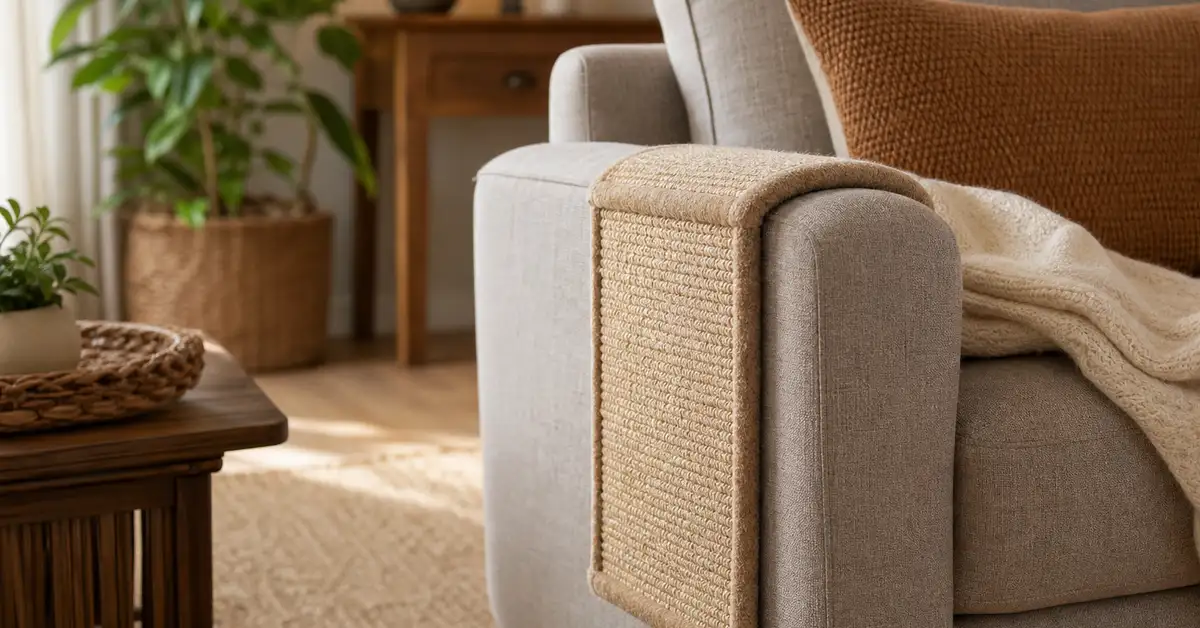
3. Sofa-Scratcher Squared Cat Scratching Post & Couch-Corner Furniture Protector — Best for Couch & Furniture Protection
What it is: A corner-shaped, sisal-covered scratching post built at a 90-degree angle specifically to sit against and protect a sofa or chair corner.
Best for: Households where the couch corner is the actual scratching target and a standalone post hasn’t redirected the behavior.
Pros: The corner-angle shape sits flush against real furniture rather than as a separate object your cat has to be redirected toward; sisal covering matches the durability of dedicated posts.
Cons: Fixed corner angle means it only fits certain furniture shapes; freestanding rather than strapped down, so check it sits firmly before relying on it.
Price band: $25–75
Evidence: Manufacturer/retailer listing, Amazon.
4. Cat Scratch Sofa Protector, Natural Sisal Drape Mat (19.7″ x 23.6″) — Best Budget Sofa-Drape Protector
What it is: A flat natural-sisal mat sized to drape directly over an existing sofa arm or cushion corner, sold in left-hand and right-hand orientations.
Best for: Renters or anyone who doesn’t want to attach or install anything, and owners who want to test whether furniture-corner protection works for their cat before committing to a permanent fixture.
Pros: Zero installation — drapes on and off in seconds; natural sisal surface holds up better than a printed carpet mat; available in left-hand and right-hand orientations to match your actual sofa.
Cons: Being a drape-on mat rather than an anchored post means it can shift out of place on slippery upholstery fabric and needs occasional repositioning.
Price band: under $25
Evidence: Manufacturer/retailer listing, Amazon.
5. SmartCat Bootsie’s Combination Scratcher — Best for Multiple Scratching Styles in One
What it is: A combination unit pairing a vertical sisal-wrapped post section with a horizontal corrugated-cardboard base, so a cat can scratch either orientation on one piece of furniture.
Best for: Households that don’t yet know (or have cats that disagree on) whether vertical or horizontal scratching is preferred.
Pros: Solves the ASPCA’s “offer a variety” advice in a single footprint rather than needing two separate products; the cardboard base is replaceable independent of the sisal post.
Cons: Smaller footprint than a dedicated tall post, so less suited to a cat that specifically wants maximum stretch height.
Price band: under $25
Evidence: Manufacturer/retailer listing, Chewy.
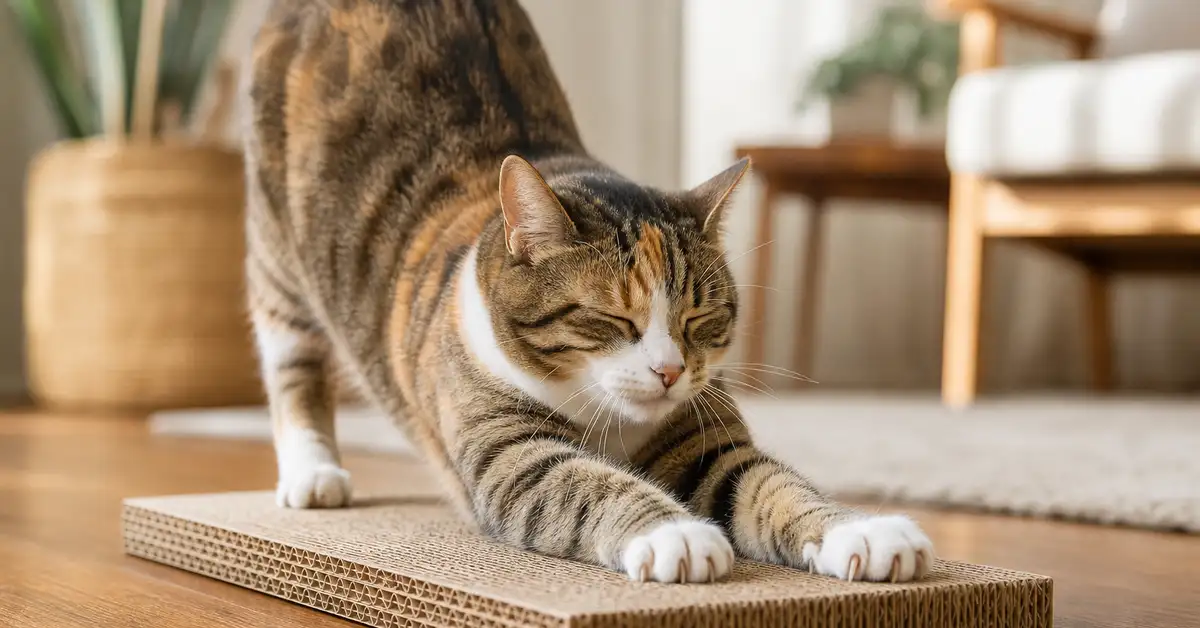
6. Frisco Double-Wide Cat Scratcher Toy with Catnip — Best Budget Cardboard Pad
What it is: A flat, reversible corrugated-cardboard scratching pad infused with catnip, sized wide enough for a full-body stretch across it.
Best for: Cats that prefer to dig in and shred rather than rake against resistance, and owners who want a cheap, easily replaced option.
Pros: Reversible design roughly doubles usable life before replacement; catnip infusion helps redirect a cat toward it from day one; low cost makes frequent replacement painless.
Cons: Cardboard sheds debris as it shreds, more than sisal or carpet; will need replacing well before a sisal post does.
Price band: under $25
Evidence: Manufacturer/retailer listing, Chewy.
7. Gothic Design Cat Scratcher (Happy & Polly) — Best Space-Saving Cardboard Pick
What it is: A flat, upright cardboard scratching board cut into a decorative gothic-arch shape, designed to lean against a wall rather than take up floor footprint.
Best for: Small apartments where a horizontal pad or wide post doesn’t fit the available space.
Pros: Leans flat against a wall, so it uses a fraction of the floor space of a horizontal pad or freestanding post; doubles as a piece of decor rather than purely utilitarian gear.
Cons: Cardboard construction means the same replacement cycle as any cardboard pad; leaning design needs a stable wall angle to stay upright under scratching force.
Price band: $25–75
Evidence: Manufacturer listing, Happy & Polly.
8. M&MKPET Natural Sisal Cat Scratcher Mat (23.6″ x 23.6″) — Best Floor-or-Wall Sisal Mat
What it is: A square natural-sisal mat designed to lie flat on the floor for horizontal scratching, with attachment tape included so it can alternatively mount to a wall.
Best for: Cats with a confirmed horizontal preference, and owners who want the option to switch it to wall-mounted use later without buying a second product.
Pros: Genuine dual-orientation use from one product; natural sisal holds up better than carpet or basic woven mats under repeated horizontal raking.
Cons: A flat mat can shift underfoot on hard flooring unless secured; not a substitute for a vertical post if your cat’s preference runs the other way.
Price band: under $25
Evidence: Manufacturer/retailer listing, Amazon.
9. Nazva Cat Scratcher Sisal Mat, 32″ x 17″ — Best Large No-Adhesive Sisal Rug
What it is: A larger-format sisal floor rug, sized for grinding claws or stretching out on, that the manufacturer notes uses no adhesive backing.
Best for: Bigger cats or multi-cat homes wanting more surface area than a standard square mat, and anyone who’d rather not deal with sticky-tape residue on their floor.
Pros: Larger surface area than most floor mats in this category; no-adhesive construction means it can be moved or replaced without leaving residue.
Cons: No adhesive also means it relies on weight and friction alone to stay put, so it can slide on smooth flooring.
Price band: under $25
Evidence: Manufacturer/retailer listing, Amazon.
10. Petlinks Scratch & Play Cat Mat, Denim — Best Mat With a Built-In Toy
What it is: A tightly woven denim mat with a sisal-style center scratching panel and an attached dangling toy, sized for stretching and lounging as well as scratching.
Best for: Cats that treat scratching as part of play rather than a standalone action, and owners who want one mat that covers both.
Pros: Denim construction is reported to hold up well to daily clawing; the attached toy gives an extra reason for a cat to return to the mat regularly, reinforcing the habit.
Cons: The sisal-style center panel is smaller than a dedicated full-mat sisal surface, so heavy scratchers may wear through the center faster than the surrounding denim.
Price band: under $25
Evidence: Manufacturer/retailer listing, Petco.
11. Max & Marlow Hanging Cat Scratch Mat — Best Door-Hanging Wall Scratcher
What it is: A natural-sisal scratch mat designed to hang over a doorknob, or lie flat on the floor as a second option, for households that want a scratcher with zero permanent footprint.
Best for: Small apartments and rentals where wall-mounting isn’t an option and floor space is already tight.
Pros: Genuinely dual-purpose (hanging or floor use) from the same product; hanging placement puts it at a natural height for a cat to reach up and scratch vertically without a freestanding post.
Cons: A hung mat can swing under enthusiastic scratching, which some cats dislike; not a substitute for a stable, weighted post if your cat wants to lean in with full body weight.
Price band: under $25
Evidence: Manufacturer/retailer listing, Petco.
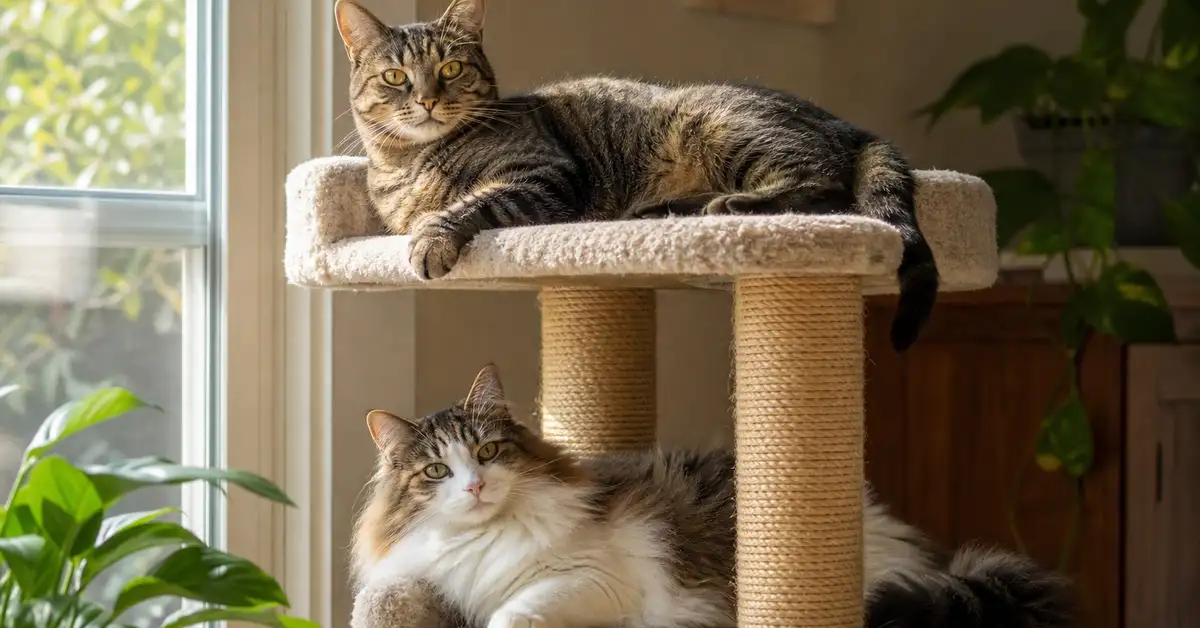
12. HAPPAWS 40-in Multi-Level Cat Tower with Sisal Scratching Post — Best for Multi-Cat Households
What it is: A 40-inch multi-level cat tree combining a sisal-wrapped scratching post with multiple perches and enclosed caves, built as one centerpiece rather than a single-purpose scratcher.
Best for: Multi-cat homes wanting one anchor piece that covers scratching, climbing, and resting in a single footprint rather than furnishing each function separately.
Pros: Combines vertical scratching with genuine climbing and resting space, which matters more in multi-cat homes where competition for good spots is real; caves give less-confident cats somewhere to retreat.
Cons: Large floor footprint compared with a single post or mat; a multi-function tower is a bigger investment than any single scratcher on this list, so it suits households ready to commit to one big piece over several small ones.
Price band: $75–150
Evidence: Manufacturer/retailer listing, Amazon.
Frequently Asked Questions
Methodology & Sources
This guide draws on manufacturer and major-retailer specifications (Chewy, Amazon, Petco, Happy & Polly) checked for current availability before inclusion, and on behavioral guidance from the ASPCA, Cornell University’s Feline Health Center, and VCA Animal Hospitals. Veterinary positions on declawing are drawn directly from the American Veterinary Medical Association’s policy and the ASPCA’s position statement. No CPSC recalls were found for any brand or product covered here as of this update; this is a point-in-time safety check, not a guarantee against future recalls. Michael Probert, our author, is a longtime multi-cat owner writing from research and lived experience, not clinical or veterinary expertise — see our About page. We have no in-house veterinary reviewer. Full editorial policy: How We Choose.
Sources: ASPCA, Destructive Scratching, ASPCA, Position Statement on Declawing Cats, Cornell Feline Health Center, VCA Animal Hospitals, AVMA, Declawing of Domestic Cats, and manufacturer/retailer listings linked throughout.
See our full cat gear guide for everything else a new cat parent needs.