Updated for 2026. Odor control in a litter box comes down to two things working together: how fast the litter absorbs moisture and binds ammonia, and how consistently you scoop. No litter, however advanced, replaces daily scooping — but the right one gives you real margin, especially in a multi-cat household or a small apartment where smells have nowhere to go.
Below, we cover 14 verified litter products plus 2 litter subscription services (PrettyLitter and Kitty Poo Club) checked against manufacturer or major-retailer listings, with a safety section on silica dust and kitten ingestion risk, and an honest look at when a subscription is worth the premium over bulk clay.
Whichever litter you choose, it performs best paired with the right setup — see our guides to best automatic litter boxes if you want less manual scooping, or best cat litter mats to catch what tracks out of the box.
How We Chose
We drew on manufacturer and major-retailer specifications (Arm & Hammer, Chewy, Purina/Tidy Cats, Catalyst Pet, PrettyLitter, Boxiecat, Modkat) and established editorial testing (Good Housekeeping’s 2026 litter round-up, Cats.com, The Spruce Pets via Boxiecat’s own citation). Every product was checked for existence and current availability before inclusion — one product’s subscription details in our initial research draft were too vague to publish as-is, so we independently verified Kitty Poo Club’s actual current model (disposable boxes, litter choice, delivery cadence, pricing) directly rather than publish an under-sourced description. Full policy: How We Choose.
How Odor Control Actually Works
Cat urine contains urea, which bacteria break down into ammonia — that’s the sharp smell of a neglected box. Litters fight this two ways: absorbing moisture fast enough to slow bacterial breakdown (clumping clay and silica crystals both do this, just via different mechanisms — clay swells into clumps, silica desiccates liquid into its porous structure), and chemically neutralizing odor once it forms (baking soda binds acidic compounds; activated charcoal adsorbs volatile molecules directly from the air). No chemical additive compensates indefinitely for a saturated box — scooping frequency still matters more than any single ingredient.
A Safety Note Before You Buy
Traditional clumping clay litters are made from sodium bentonite, which can generate crystalline silica dust during pouring and digging — a genuine respiratory consideration in a small, poorly-ventilated apartment. Silica-gel crystal and plant-based litters generally produce far less dust. Separately, very young kittens exploring their environment by mouth are sometimes better started on a larger-particle, non-clumping litter (like pine pellets) rather than clumping clay or crystal beads, to reduce ingestion risk. No CPSC or FDA action targets any conventional litter type as of this update — these are ongoing safety considerations, not recalls, and matching litter type to your cat’s health profile is worth a quick conversation with your vet if anything applies to your household.
Transparency first: This guide contains affiliate links. If we’re enrolled in an affiliate program, we may earn a commission at no extra cost to you — it never affects how we research or rank. Read our full affiliate disclosure policy.
1. Dr. Elsey’s Ultra Unscented Clumping Clay Litter — Best Overall
What it is: A hard-clumping, unscented, low-tracking clay litter named “Best Overall” in Good Housekeeping’s 2026 litter test.
Best for: Multi-cat or single-cat homes wanting strong odor control without added fragrance.
Pros: Reliable, firm clumps for thorough urine removal; unscented formula avoids overwhelming small spaces or cats who dislike perfumed litter; medium-grain texture tracks less than fine clay.
Cons: Still a bentonite clay litter, so the usual silica-dust consideration applies; heavier than plant-based alternatives.
Price band: $$ (mid-range)
Evidence: Good Housekeeping, 2026 best cat litter test.
2. Arm & Hammer Clump & Seal Complete Odor Sealing Litter, Multi-Cat — Best for Multi-Cat Odor Control
What it is: A clumping clay litter using moisture-activated “odor seal” technology plus embedded baking soda, formulated specifically for multi-cat homes.
Best for: Multi-cat households where boxes see heavy daily traffic and ammonia builds up fast.
Pros: Tight, low-crumb clumps make thorough scooping easier; baking soda works to neutralize odor at the clump itself; low tracking versus older clay formulas.
Cons: Contributes to household silica dust like any clay litter; heavier to carry and dispose of than plant-based options.
Price band: $$ (mid-range)
Evidence: Manufacturer listing (Arm & Hammer).
3. Scoop Away Multi-Cat Clumping Cat Litter — Best Value
What it is: A scented, clumping clay litter built for multi-cat homes, named “Best Value” in Good Housekeeping’s 2026 test.
Best for: Cost-sensitive multi-cat households that still want strong, editorially-validated odor control.
Pros: Affordable relative to premium odor-control litters; tight clumps for easy waste removal; proven odor-blocking in independent testing.
Cons: Scented formula may be too strong for some cats or small apartments; standard clay dust/silica considerations apply.
Price band: $ (budget)
Evidence: Good Housekeeping, 2026 best cat litter test.
4. Fresh Step Heavy Duty Odor Block Clumping Litter — Best Odor Control (Editor’s Pick)
What it is: A heavily-fortified clumping clay litter named “Best Odor Control” in Good Housekeeping’s 2026 test.
Best for: Households where odor intensity is the single biggest concern, more than fragrance-free preferences.
Pros: Top-tier odor-blocking performance in independent testing; strong clumping supports thorough waste removal.
Cons: More heavily scented/additive-loaded than unscented options — check your cat’s tolerance; standard clay dust considerations.
Price band: $$ (mid-range)
Evidence: Good Housekeeping, 2026 best cat litter test.
5. Boxie (Boxiecat) Probiotic Clumping Clay Litter — Best Low-Dust Premium Pick
What it is: A premium clumping clay litter with added probiotic cultures intended to limit odor-producing bacterial activity, named “Best Overall Cat Litter” by The Spruce Pets after testing 29 litters.
Best for: Multi-cat homes in small apartments where low dust and independently-validated odor control justify a premium price.
Pros: Strong third-party test results across odor, tracking, and clumping; low dust and low tracking versus standard clay; probiotic angle is a genuine point of difference.
Cons: Priced above standard clumping clay; still a bentonite-based litter with the usual dust profile, just reduced.
Price band: $$$ (premium)
Evidence: Boxiecat, citing The Spruce Pets test of 29 litters.
6. Arm & Hammer Multi-Cat Strength Original Clumping Litter — Best Budget Multi-Cat
What it is: A traditional clumping clay litter with Arm & Hammer baking soda, marketed as low-tracking and 99% dust free.
Best for: Budget-conscious multi-cat households that still need strong daily odor control.
Pros: Proven clumping and odor neutralization at a lower price point than premium options; reduced dust versus older clay formulas.
Cons: Standard clay dust/silica considerations; heavier and bulkier than plant-based litters, which matters if you’re carrying bags upstairs.
Price band: $ (budget)
Evidence: Manufacturer listing (Arm & Hammer).
7. Tidy Cats Odor Absorb Non-Clumping Litter — Best for Minimal Daily Maintenance
What it is: A non-clumping clay litter Purina states can deliver up to 10 days of odor control per fill, sold in large club-size bags.
Best for: Multi-cat households that prefer periodic full-box changes over daily scoop-and-clump routines.
Pros: Long claimed odor-control window reduces how often you handle litter; near-dust-free formula; economical in bulk sizes.
Cons: Non-clumping means you can’t selectively remove urine — the whole box saturates and needs full replacement; Purina itself notes vets often don’t recommend clay for cats with respiratory issues.
Price band: $ (budget, especially in bulk)
Evidence: Manufacturer listing (Purina/Tidy Cats).
8. Chewy Micro Crystal Unscented Non-Clumping Cat Litter — Best Silica Crystal for Small Apartments
What it is: A silica-gel crystal litter Chewy markets as providing up to 30 days of odor control via rapid moisture desiccation and ammonia trapping.
Best for: Small apartments and shared-wall living where low dust and long intervals between full changes matter most.
Pros: Very low dust versus clay, benefiting respiratory-sensitive households; long claimed odor-control window per fill; low tracking.
Cons: Costs more per bag than standard clay; some cats dislike the coarser crystal texture underfoot; solid waste still needs daily scooping.
Price band: $$$ (premium)
Evidence: Manufacturer/retailer listing (Chewy).
9. PrettyLitter — Best Subscription With Health Monitoring
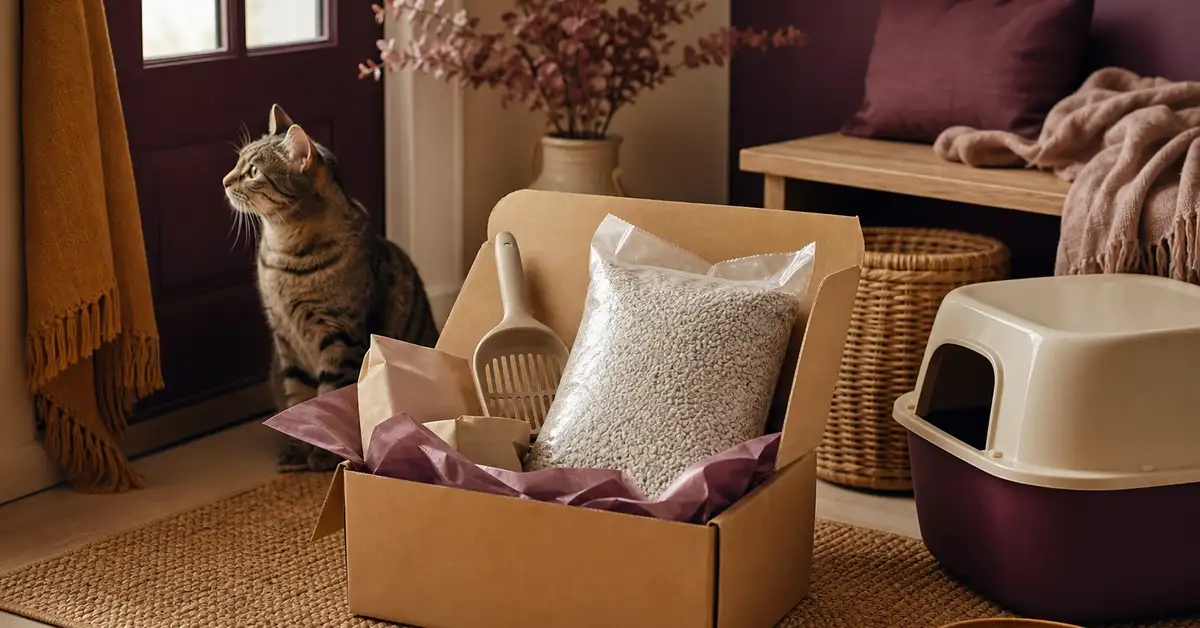
What it is: A silica-gel crystal litter delivered on a monthly subscription; the maker says the crystals change color in response to urine pH — treat any color change as a reason to call your vet, not a reading to interpret yourself.
Best for: Small-apartment or urban owners who want long-lasting odor control, low dust, and color-changing crystals — treat any color change as a reason to call your vet, not a reading to interpret yourself.
Pros: Strong odor control and low dust like other silica crystals; predictable monthly delivery means no emergency litter runs; color-change monitoring can prompt an earlier vet visit.
Cons: Costs more per month than bulk clay purchased in large bags; color-change signals should be interpreted alongside your vet, not as a standalone diagnosis; also sold without a subscription if you want to try it first.
Price band: $$$ (premium subscription)
Evidence: Manufacturer listing (PrettyLitter).
10. Arm & Hammer Naturals Clumping Litter, Multi-Cat (Corn-Based) — Best Natural Multi-Cat Pick
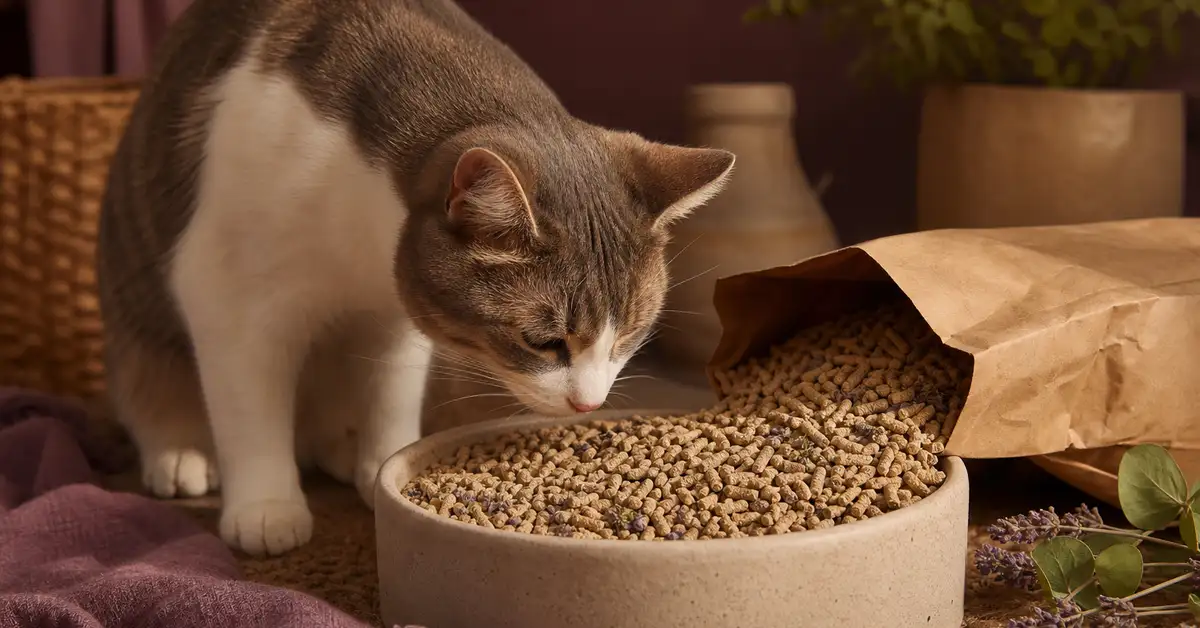
What it is: A plant-based clumping litter made from natural corn, baking soda, and plant extracts, which the manufacturer states absorbs twice as much urine as clumping clay.
Best for: Multi-cat households wanting strong absorption with less silica dust and a lighter bag to carry.
Pros: High absorption claim backed by a corn-fiber matrix; meaningfully less silica dust than clay; lighter weight for transport.
Cons: Clumps can be softer than clay and break apart more easily when scooping; may need more frequent full changes in very heavy multi-cat use.
Price band: $$ (mid-range)
Evidence: Manufacturer listing (Arm & Hammer).
11. Naturally Fresh Quick Clumping Walnut Shell Cat Litter — Best Zero-Silica-Dust Pick
What it is: A 100% ground-walnut-shell clumping litter containing no silica dust, which the manufacturer states absorbs three times better than traditional clay in lab testing.
Best for: Households that want a zero-silica-dust substrate.
Pros: Zero silica dust is a real advantage for vulnerable cats and humans; strong absorption claims; low tracking.
Cons: Walnut clumps can be less dense than clay, needing careful scooping; potentially higher per-bag cost than commodity clay; a small subset of households may be sensitive to nut-shell dust.
Price band: $$ (mid-range)
Evidence: Manufacturer listing (Naturally Fresh / Only Natural Pet).
12. Catalyst Pet Multi-Cat Formula Cat Litter — Best Lightweight Plant-Based Multi-Cat Pick
What it is: A plant-based, multi-cat-formulated litter made from upcycled softwood materials, positioned as strong odor control without clay’s weight, dust, or waste.
Best for: Multi-cat households wanting to avoid clay entirely while keeping strong odor performance and easier bag-carrying.
Pros: Multi-cat-specific formulation; noticeably lighter than clay for transport; low dust and reduced waste footprint; upcycled materials appeal to sustainability-minded owners.
Cons: Clumps may not match bentonite clay’s firmness, so scooping technique matters more; odor performance depends more heavily on consistent maintenance than top clay picks.
Price band: $$ (mid-range)
Evidence: Manufacturer listing (Catalyst Pet).
13. Feline Pine Non-Clumping Litter — Best for Kittens & Health-Vulnerable Cats
What it is: A non-clumping pine-pellet litter that breaks down into sawdust when wet, using pine’s natural scent alongside absorption for odor control.
Best for: Kittens still in an exploratory mouthing phase, and households that want a low-dust, silica-free substrate.
Pros: Larger pellet size is less likely to be swallowed by curious kittens than clumping clay or crystal beads; low dust; biodegradable.
Cons: Odor can shift toward a “farm-like” smell once pellets are fully saturated; non-clumping means full-box changes rather than selective scooping, which can mean more frequent changes in heavy multi-cat use.
Price band: $ (budget)
Evidence: Manufacturer listing (Arm & Hammer / Feline Pine).
14. I Am Tofu Clumping Tofu Cat Litter (Charcoal) — Best Activated-Charcoal Plant-Based Pick
What it is: A flushable, clumping tofu-based litter with activated charcoal added specifically to adsorb odor-causing compounds — named a top performer in Cats.com’s tofu litter testing.
Best for: Eco-conscious owners in small apartments who want plant-based, low-dust litter with genuinely enhanced odor control from the charcoal.
Pros: Charcoal adsorption adds real odor-control capacity beyond the tofu base; flushable and low dust; clumps for selective waste removal similar to clay.
Cons: Pricier than basic clay or pine; clumps softer than bentonite clay; some cats need an adjustment period for the different texture.
Price band: $$ (mid-range)
Evidence: Cats.com, tofu litter testing.
15. Kitty Poo Club — Best Subscription for a Fresh Box Every Month
What it is: A subscription service delivering a disposable, FDA-approved food-grade-waterproofed cardboard litter box pre-filled with your litter choice (clay, silica, fine-grain silica, diatomite, or organic soy) every four weeks — you toss the whole box and start fresh rather than scrubbing a permanent one.
Best for: Busy or urban owners who want to eliminate box-scrubbing entirely and reset odor at the source every month, not just the litter inside it.
Pros: A genuinely fresh box each month avoids the odor that can seep into porous plastic over time, regardless of litter type; choice of litter material to match your cat’s preference; adjustable delivery frequency.
Cons: Costs more monthly than buying litter alone and reusing a permanent box; requires cardboard recycling access; an XL box is available for large cats at a higher price.
Price band: $$$ (premium subscription)
Evidence: Manufacturer listing (Kitty Poo Club) — verified directly, not from secondary summary.
16. Modkat Natural Activated Charcoal Cat Litter Additive — Best Add-On to Boost Any Litter
What it is: Not a standalone litter — an activated-charcoal additive you mix into whatever litter you already use, designed to neutralize odor, inhibit bacterial growth, and extend litter life, fragrance-free.
Best for: Owners who like their current litter’s clumping or texture but need extra odor control without switching products entirely.
Pros: Works with any litter type; fragrance-free odor reduction rather than masking; can extend time between full-box changes.
Cons: An added cost on top of your regular litter; doesn’t replace the need for a fundamentally absorbent base litter or regular scooping; dark granules are visible mixed into lighter litters.
Price band: $ (budget add-on)
Evidence: Manufacturer listing (Modkat).
Frequently Asked Questions
Methodology & Sources
This guide draws on manufacturer and major-retailer specifications (Arm & Hammer, Chewy, Purina/Tidy Cats, Catalyst Pet, PrettyLitter, Boxiecat, Modkat, Only Natural Pet, Kitty Poo Club) and established editorial testing from Good Housekeeping’s 2026 litter round-up, Cats.com, and The Spruce Pets (via Boxiecat’s citation of its 29-litter test). Every product was checked against a manufacturer or major-retailer listing for existence and current availability before inclusion. No CPSC or FDA recalls apply to any conventional litter type as of this update; ongoing safety considerations (silica dust, kitten ingestion risk) are discussed above, not treated as reasons to avoid any specific brand. Michael Probert, our author, is a longtime multi-cat owner writing from research and lived experience, not clinical or veterinary expertise — see our About page. We have no in-house veterinary reviewer. Full editorial policy: How We Choose.
Sources: Good Housekeeping, Cats.com, Cats.com (tofu litter test), Boxiecat (citing The Spruce Pets), The Refined Feline, PMC (bentonite dust case report), and manufacturer/retailer listings linked throughout.
Ready to tackle odor from every angle? See our guide on best litter boxes for multiple cats, our best enclosed & covered litter boxes guide, our breakdown of how many litter boxes you should have, our best cat litter mats guide for tracking control, our guide on how to get rid of litter box smell for the full cleaning routine, or the full cat gear guide.