Updated for 2026. If you’re weighing a covered or enclosed litter box, the honest answer is: it depends on your cat, not just your apartment. Covered boxes genuinely help with odor containment and discretion in small, shared-wall living spaces — but veterinary behaviorists are clear that covers aren’t universally preferred by cats, and can even concentrate odors inside the box if you’re not scooping daily.
Below, we cover 13 currently-sold enclosed, covered, top-entry, furniture-style, and automatic litter boxes verified against manufacturer or major-retailer listings, with a Consumer Product Safety Commission recall screen and behavioral guidance from Cornell Feline Health Center on when a covered box helps versus when it backfires. We lead with the long-tail angle this site is built around: odor control for small apartments and shared walls, true discretion (disguising the box as furniture), and enough room for large or multiple cats.
How We Chose
We drew on manufacturer and major-retailer specifications (Chewy, Walmart, PetSafe, Amazon), Cornell Feline Health Center’s house-soiling and litter box guidance, veterinary clinical guidance from Newtown Square Veterinary Hospital, and established editorial coverage (Cats.com, Consumer Reports, Good Housekeeping, The Spruce Pets). Every product below was checked against a manufacturer or major-retailer listing for existence and spec accuracy before inclusion — two products from our initial research draft didn’t hold up to that check and were corrected or swapped for verified real alternatives rather than published as described. We also ran a Consumer Product Safety Commission recall screen across the enclosed litter box and litter furniture category. Full policy: How We Choose.
An important behavioral caveat before you buy: a 2012 study at Ross University School of Veterinary Medicine found that roughly 70% of cats show no strong preference between covered and uncovered boxes when cleanliness and litter type are controlled — but for the remaining share, and for cats already showing signs of avoidance, Cornell Feline Health Center’s guidance is direct: covers can hold odors in, and cats who feel ambushed or unable to see their surroundings in a multi-cat home may do better with an open box offering a 360-degree view. If your cat is currently avoiding a covered box, that’s a signal worth listening to, not overriding.
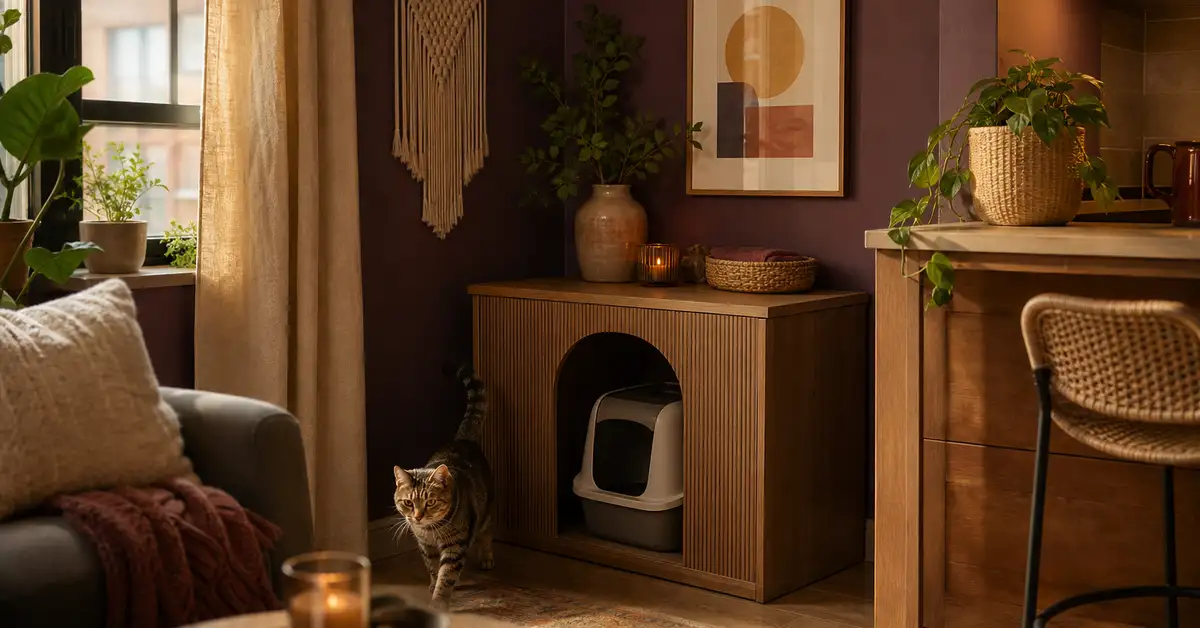
Transparency first: This guide contains affiliate links. If we’re enrolled in an affiliate program, we may earn a commission at no extra cost to you — it never affects how we research or rank. Read our full affiliate disclosure policy.
1. Vibrant Life Extra-Large Hooded Enclosed Cat Litter Box — Best Overall for Multi-Cat & Odor Control
What it is: A traditional hooded box scaled up for large cats and multi-cat homes, with a deep tray, hinged front door, and a built-in air purification element in the hood.
Best for: Budget-conscious multi-cat households wanting genuine odor containment without an automatic box’s price tag.
Pros: Extra-large, deep pan gives cats real room to dig and turn; hood plus air purification helps contain odor in small apartments; hinged door reduces scatter.
Cons: Some cats dislike pushing through the hinged door flap; as with any covered box, odor can concentrate inside if not scooped daily.
Price band: under $25
Evidence: Manufacturer/retailer listing (Walmart).
2. iPrimio XL Stainless Steel Enclosed Litter Box — Best for Large Cats & Long-Term Hygiene
What it is: A stainless steel litter pan with a detachable high-sided enclosure, sized for big cats, reviewed directly by Cats.com as a top stainless-steel enclosed pick.
Best for: Large cats and guardians who want a box that won’t stain, retain odor, or need replacing every year or two the way scratched plastic often does.
Pros: Non-porous stainless steel resists odor retention and staining far better than plastic; detachable enclosure contains scatter; rust-resistant and durable.
Cons: Pricier than a basic plastic pan; the enclosure is an add-on, not a full hood, so it offers less visual discretion than furniture-style options.
Price band: $75–150
Evidence: Cats.com review; manufacturer/retailer listing.
3. Frisco Multi-Function Covered Cat Litter Box, 29-in — Best Large Covered Box for Small Apartments
What it is: A high-walled, fully covered box made in the USA from BPA-free recyclable plastic, with a removable lid for scooping and a wide, low-profile entrance.
Best for: Apartment dwellers who want a genuinely private, spray-contained box without stepping up to furniture-enclosure pricing.
Pros: Large overall footprint (29.73 x 17.5 x 17.64 in) with a roomy inner tray; low-profile entrance suits most cats including seniors; lid lifts off entirely for easy deep-cleaning.
Cons: Fully enclosed design means odor can build up between scoops faster than an open pan; large footprint needs real floor space.
Price band: $75–150
Evidence: Manufacturer/retailer listing (Chewy).
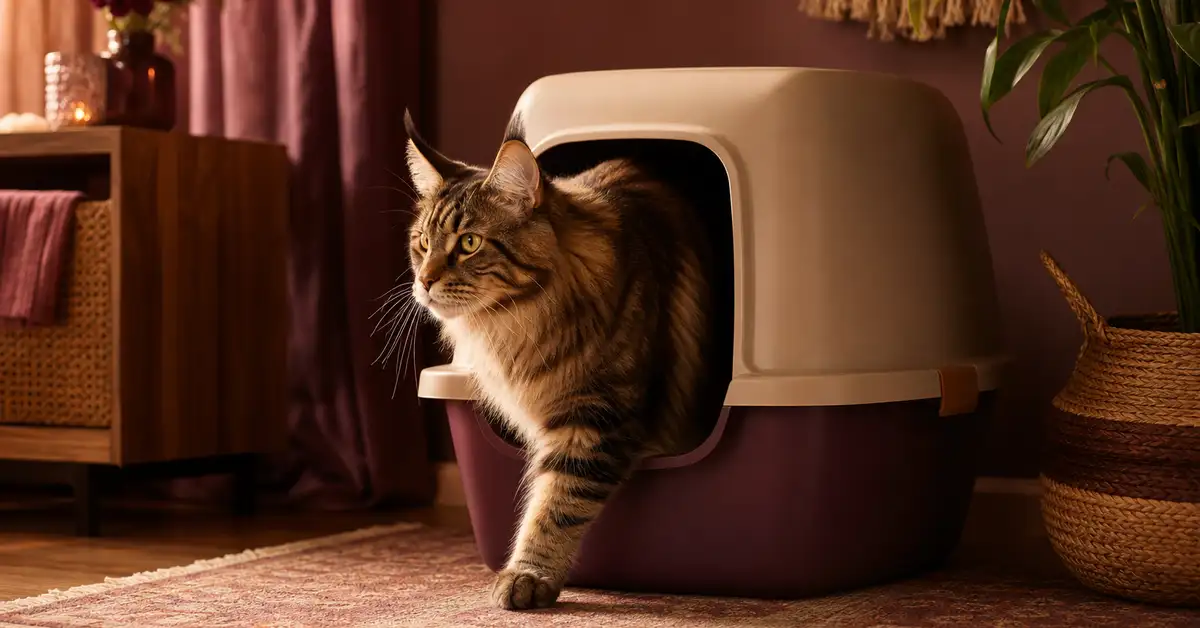
5. Modkat Square Top Entry Litter Box — Best Design-Forward Top-Entry
What it is: An award-winning, design-focused top-entry box built specifically to eliminate litter tracking while looking like a piece of modern furniture rather than a utilitarian pan.
Best for: Guardians who want a box they won’t feel the need to hide, placed in a visible part of a small apartment.
Pros: Sleek, square silhouette blends into modern decor better than most plastic pans; top-entry structure reduces tracking and contains spray.
Cons: Premium pricing versus basic top-entry pans; like all top-entry designs, may not suit larger cats or those who dislike vertical, narrow entrances.
Price band: $75–150
Evidence: Manufacturer listing (Modkat).
6. Petmate Booda Cleanstep Litter Dome — Best Dome for Extra Room
What it is: A spherical, fully-domed litter box with integrated entry steps designed to catch litter off paws, with roughly 50% more internal volume than an average covered box.
Best for: Large or multiple cats who need genuine room to turn and dig inside a covered box without feeling cramped.
Pros: Notably larger internal volume than typical hooded boxes reduces the “confined” feeling some cats dislike in covers; integrated steps reduce tracking; fully hides the litter area from view.
Cons: Dome shape is visually conspicuous — not a discreet, furniture-like option; single entrance can still allow one cat to block access to another in multi-cat homes.
Price band: $25–75
Evidence: Manufacturer listing (Petmate).
7. Refined Feline Refined Cat Litter Box Deluxe — Best Furniture-Style for Full Discretion
What it is: A cabinet-style enclosure sold in a choice of sizes, colors, and styles, built to disguise a standard litter tray as a genuine piece of living-room or bedroom furniture.
Best for: Guardians who want the box fully out of sight in a shared living space, not just covered.
Pros: Genuinely disguises the litter area as furniture rather than an obviously pet-related object; front or side access panels make scooping manageable; available in multiple finishes to match decor.
Cons: A cramped or poorly ventilated cabinet can concentrate odor behind an attractive exterior — internal space and airflow matter as much as the outside look; higher price point than a standalone box.
Price band: $150–300
Evidence: Manufacturer listing (The Refined Feline).
See it at The Refined Feline →
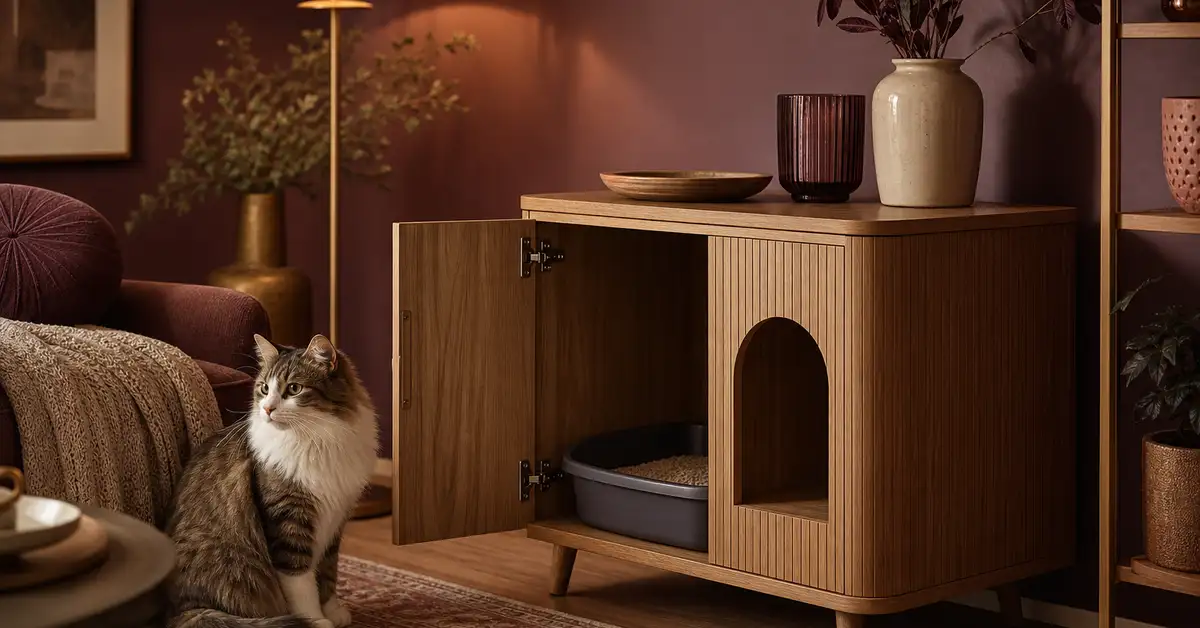
8. NewAgePet Litter Loo ECOFLEX Litter Box Furniture — Best Eco-Friendly Furniture Enclosure
What it is: A furniture-style enclosure built from ECOFLEX, a composite material the manufacturer describes as non-toxic and impervious to moisture and odor, designed specifically to withstand litter box duty long-term.
Best for: Guardians who want a furniture enclosure that won’t absorb odor or warp from moisture over years of use.
Pros: Moisture- and odor-resistant material is a genuine advantage over painted wood or MDF cabinet alternatives; disguises the box fully as furniture; built for durability.
Cons: Internal ventilation and space still need to be adequate — an odor-resistant material doesn’t substitute for daily scooping; premium pricing.
Price band: $75–150
Evidence: Manufacturer listing (NewAgePet).
9. Way Basics Eco Cat Litter Box Enclosure — Best Budget Furniture Enclosure
What it is: A furniture-style, tool-free-assembly enclosure made from sustainable, recycled zBoard paperboard, sold directly by Way Basics and through major retailers.
Best for: Guardians who want the discretion of a furniture enclosure at a lower price point than solid-wood or ECOFLEX cabinets.
Pros: Meaningfully cheaper than premium furniture enclosures; tool-free, peel-and-stick assembly; eco-friendly recycled material.
Cons: Paperboard construction is less moisture-resistant long-term than ECOFLEX or solid wood alternatives; smaller internal capacity than some competitors, so check dimensions against your cat’s size first.
Price band: $75–150
Evidence: Manufacturer listing (Way Basics); also available via major retailers.
10. PetSafe Multi-Cat Litter Box — Best Open High-Sided Pan for Multi-Cat Homes
What it is: Not a fully enclosed box — an oversized, high-sided open pan with a matching oversized scoop and removable storage compartments, included here deliberately as an honest hybrid option.
Best for: Multi-cat households where at least one cat shows signs of avoiding covered boxes, per Cornell’s guidance that some cats do better with a 360-degree view.
Pros: High sides contain scatter and spray without limiting visibility or escape routes; oversized scoop and storage support the daily-scooping habit that matters more than enclosure type; reduces ambush risk in multi-cat homes.
Cons: No odor-containing hood or lid, so it won’t match a covered box’s discretion or smell containment in a small apartment.
Price band: $75–150
Evidence: Manufacturer listing (PetSafe).
11. Litter-Robot 4 — Best Automatic Enclosed for Hands-Off Odor Control
What it is: A fully automatic, self-cleaning globe-style box that seals waste into an odor-trapping bin after each use — also our flagship guide’s top overall pick; see our full automatic litter box roundup for how it compares to other automatic options.
Best for: Guardians who want the strongest odor control this list covers and are prepared for a premium price and a genuinely large footprint.
Pros: Consumer Reports’ editor’s choice; seals waste out of sight and smell within minutes of use; works with standard clumping litter.
Cons: The most expensive box in this guide; some cats are startled by the cleaning cycle’s movement and noise, per veterinary guidance — introduce gradually and keep a backup box available.
Price band: $300–700
Evidence: Consumer Reports; Good Housekeeping review.
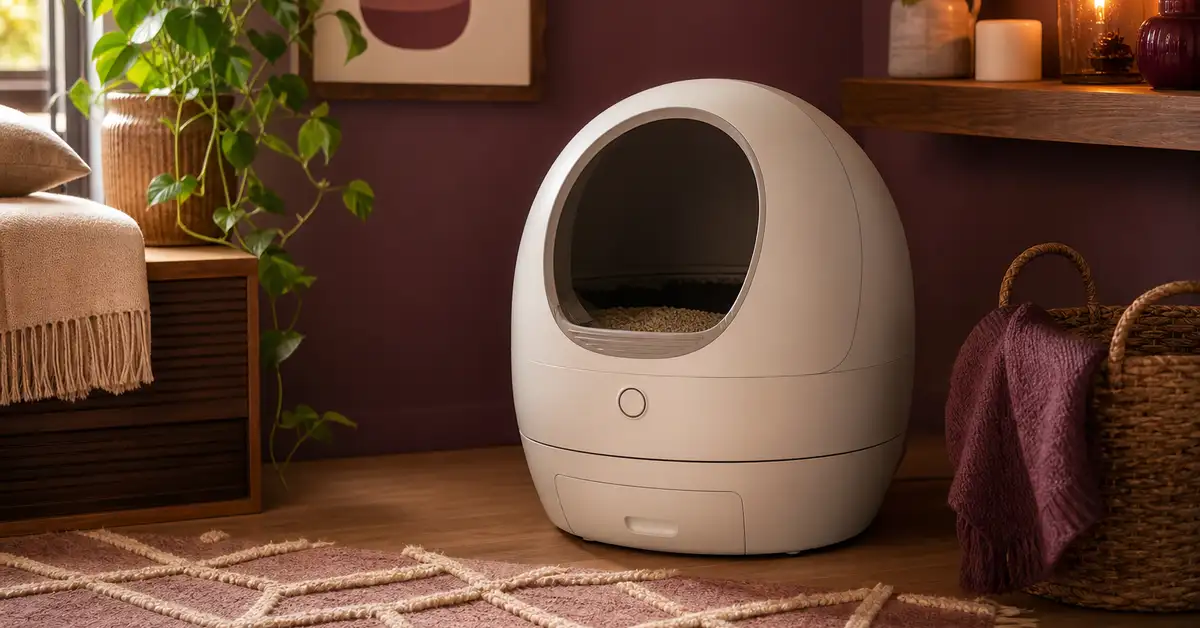
12. PetSafe ScoopFree Self-Cleaning Litter Box + Privacy Cover — Best Budget-Friendly Automatic Enclosed
What it is: PetSafe’s ScoopFree self-cleaning litter box paired with its official Privacy Cover accessory — the base unit uses crystal litter and rakes waste automatically; the cover adds the enclosed, private element.
Best for: Guardians who want automatic waste removal and a covered box without paying Litter-Robot pricing.
Pros: Crystal litter absorbs odor effectively and can go weeks between full changes; disposable trays simplify deep cleaning; cover adds privacy and reduces litter scatter on three sides.
Cons: The cover is a separate accessory, not a single all-in-one covered unit — check that your specific ScoopFree generation is compatible before buying; like other automatic boxes, some cats need a gradual introduction.
Price band: $150–300
Evidence: Manufacturer listing (PetSafe, base unit + Privacy Cover).
13. PetSnowy Automatic Litter Box — Best Compact Automatic Enclosed
What it is: An enclosed, sensor-driven self-cleaning box named a top pick in The Spruce Pets’ tested ranking of automatic litter boxes, built into a smaller, rounded housing than the Litter-Robot line.
Best for: Small apartments that want automatic odor control without the Litter-Robot 4’s larger footprint.
Pros: Editorially tested and recommended by The Spruce Pets; enclosed housing hides waste and contains odor; smaller footprint suits tighter spaces.
Cons: Like all automatic boxes, mechanical movement can unsettle some cats initially; premium pricing versus non-automatic covered options.
Price band: $300–700
Evidence: The Spruce Pets feature (via PetSnowy).
Frequently Asked Questions
Methodology & Sources
This guide draws on manufacturer and major-retailer specifications (Chewy, Walmart, PetSafe, Amazon, IRIS USA, Modkat, Petmate, The Refined Feline, NewAgePet, Way Basics, Litter-Robot, PetSnowy), veterinary behavioral guidance from Cornell Feline Health Center and Newtown Square Veterinary Hospital, and established editorial coverage from Cats.com, Consumer Reports, Good Housekeeping, and The Spruce Pets. Every product was checked against a manufacturer or major-retailer listing for existence and accurate specifications before inclusion, and we ran a Consumer Product Safety Commission recall screen across the enclosed litter box and litter furniture category — no recalls found for any product or brand featured here as of this update. Michael Probert, our author, is a longtime multi-cat owner writing from research and lived experience, not clinical or veterinary expertise — see our About page. We have no in-house veterinary reviewer. Full editorial policy: How We Choose.
Sources: Cornell Feline Health Center, Newtown Square Veterinary Hospital, Cats.com, Consumer Reports, Good Housekeeping, Chewy, CPSC.gov, and manufacturer/retailer listings linked throughout.
Looking for a different setup? See our best automatic & self-cleaning litter boxes flagship guide, our best litter boxes for multiple cats picks for open pans, our guide on how many litter boxes you should have, or the full cat gear guide.