Updated for 2026. The first week with a new kitten goes best when the home is ready before the kitten arrives. Kittens are curious, small and fast, and they do not yet judge distances or dangers well. This checklist walks through what to set up first, what to buy, what to ask your vet, and how to handle the first seven days. Every point comes from a named veterinary or welfare organization, and we say where each one comes from. We do not recommend specific products here. For gear, see our cat gear guide.
This is general information for cat owners, not veterinary advice. We have no in-house veterinary reviewer. Your own vet knows your kitten’s age, history and needs. Use this page to prepare, then let your vet set the plan.
Step 1: Set Up a Base Room Before Arrival
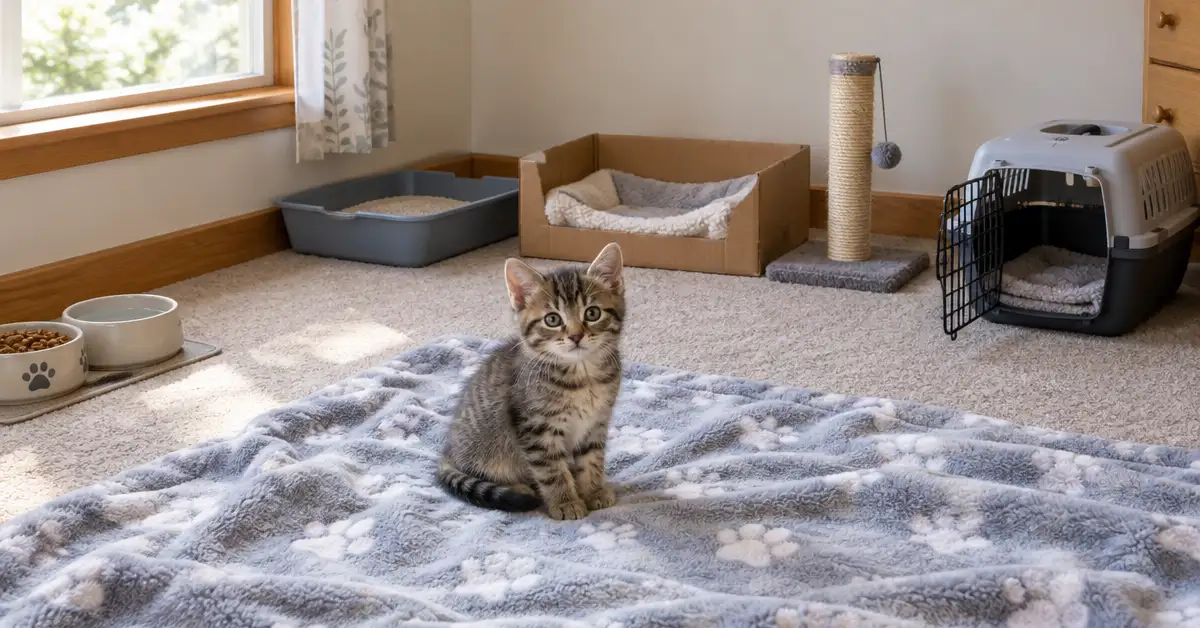
VCA Animal Hospitals advises starting a new kitten in one small, quiet room away from household traffic, rather than giving it the whole house on day one. A single room is less overwhelming, and it lets the kitten learn where its food, water and litter box are. PetMD gives the same advice: set up a confined, kitten-proofed area first and open up the rest of the home gradually over the first few weeks.
Plan the room in three zones. Cornell Feline Health Center says to keep dishes away from the litter box to avoid contamination, and the ASPCA says to keep food and water apart from the litter box. So put the litter box in one corner, the bowls on the opposite side, and a bed or resting spot in a third area. Add a scratching post and a few toys so the kitten has something to do from the start.
Step 2: Kitten-Proof the Room (and the Home You Will Open Up Later)
Crouch down and look at the room from kitten height. The sources we read agree on the same short list of hazards:
- Windows and doors. PetMD advises shutting windows, because kittens can shred screens. Purina UK advises keeping windows and doors closed until the kitten has settled in.
- Cords and strings. PetMD recommends zip-tying or taping loose electrical cords and tying up blind cords. PetMD also lists yarn, thread, rubber bands, hair ties and twist ties as things kittens may swallow, and VCA lists string, electrical cords and rubber bands.
- Small and sharp objects. VCA says to remove sharp objects and other items a kitten could swallow. Purina UK points out that kittens can climb into open dishwashers and washing machines, so keep those doors shut, and advises keeping plastic bags out of reach.
- Hidden gaps. VCA recommends inspecting nooks and crannies, including under and behind furniture and appliances, for places a kitten could squeeze into.
- Houseplants. The ASPCA keeps a searchable list of plants that are safe and unsafe for cats. Check every plant in the base room against it, and move any that are listed as unsafe.
This is general information, not veterinary advice. If your kitten swallows something it should not have, or chews an unsafe plant, call your veterinarian.
Step 3: Gather the Basics for the First Week
The ASPCA’s cat care checklist, PetMD and Purina all list almost the same essentials. None of it needs to be expensive to start.
- Litter box and litter. Cornell notes that kittens may need a box with sides low enough to climb into. VCA says most cats prefer fine-grained, clumping litter at least about three inches deep, in a large box in a quiet, easy-to-reach spot. The ASPCA recommends unscented litter. If you are comparing boxes, our guides to enclosed litter boxes and litter boxes for multiple cats cover size and access in detail.
- Kitten food. Buy a food made for kittens, or labeled for all life stages, and ask the breeder, shelter or previous owner what the kitten has been eating so you can start with the same food.
- Food and water bowls. Easy-to-clean dishes, with fresh water available at all times. The ASPCA says to wash and refill the water bowl daily.
- A bed. The ASPCA says each cat needs its own clean, dry place to rest, lined with a soft blanket or towel. Purina suggests a roomy cardboard box with a cut-out doorway and a washable cushion as a simple first bed.
- Scratching post and toys. Cornell advises providing a scratching post before the cat comes home. The ASPCA lists interactive toys as a core supply. Our cat scratchers guide explains the different types.
- Brush and comb. The ASPCA and Purina both list grooming tools. Gentle brushing also gets a kitten used to being handled.
- Carrier. You need one for the ride home and for every vet visit. VCA suggests lining it with a towel that smells familiar. Our guide to getting a cat into a carrier covers how to make it a safe place.
- ID. The ASPCA lists a safety collar with an ID tag, and the AAHA and AVMA preventive care guidelines recommend permanent identification such as a microchip. Ask your vet about microchipping.
Step 4: Book the First Vet Visit
Cornell Feline Health Center advises having any new cat checked by a veterinarian as soon as possible after it comes home. It also advises keeping the newcomer apart from any other cats in the house until the vet has examined it. Your vet sets the schedule for the first visit and any follow-ups.
Write your questions down before you go, and bring any records from the breeder, shelter or previous owner. Good topics to raise are:
- the vaccination plan for your kitten
- flea and worm prevention (AVMA’s guidance on flea and tick products stresses that protection is not one-size-fits-all, and says to talk to a vet before applying any spot-on product, especially to a very young cat)
- when to schedule spay or neuter surgery
- microchipping and registration
- what, how much and how often to feed
- litter box and behavior questions
If you notice a change in your kitten’s appetite, energy, breathing or litter box habits, call your veterinarian rather than waiting. This is general information, not veterinary advice.
Step 5: Feeding and Litter Basics
Feeding. Cornell says to feed a complete and balanced diet made for the cat’s life stage, and to check the label for an AAFCO nutritional adequacy statement. Kitten and adult formulas are not the same. Cornell advises finding out what the kitten was eating, continuing some of that food, and switching to a new one gradually. The ASPCA says to keep snacks to a small part of the daily diet. Exact amounts and meal frequency depend on your kitten’s age and size, so ask your vet, and see our cat feeding chart for how feeding changes from kitten to adult.
Litter training. VCA says young kittens usually pick up litter habits quickly when they start in a room with a box. Scoop daily, and follow the ASPCA and VCA advice on regular full litter changes and washing the box with mild soap and hot water. If your kitten has an accident, VCA says not to punish it. Clean the spot calmly, then check the box’s size, location and cleanliness. If accidents keep happening, mention it to your vet.
Your First-Week Timeline
Day 1: Arrival
VCA recommends a calm ride home, with the kitten in a carrier lined with a familiar-smelling towel. At home, put the carrier in the base room, open the door, and let the kitten come out in its own time, with food, water and the litter box close by. If the kitten is still at the back of the carrier after about half an hour, VCA suggests gently lifting off the top of the carrier, picking the kitten up, and showing it where its food, water and litter box are. Then step back and let it explore. Resist the urge to give a house tour.
Days 2 to 3: Routine and Confidence
Spend time in the room every day, playing and handling the kitten gently. Keep meals and litter scooping on a predictable schedule. VCA suggests leaving the carrier open in the feeding area, with a toy or the food bowl inside, so the kitten learns it is not a threat. Start gentle brushing. Notice the kitten’s normal pattern of sleeping, playing and eating, so changes stand out. Confirm the vet appointment.
Days 4 to 7: Widening the Territory
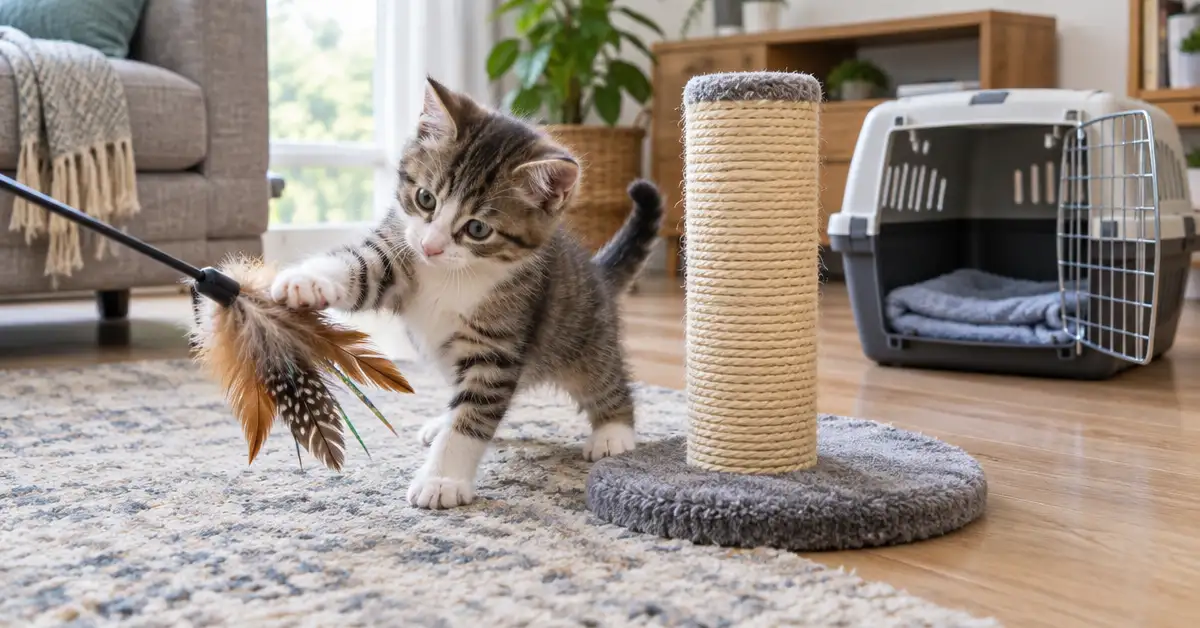
VCA suggests letting a confident kitten explore the rest of the home one room at a time, staying with it at first and returning it to the base room when you cannot supervise. Check each new room for the hazards in Step 2 before the kitten goes in. If you have another cat or a dog, VCA recommends slow, controlled introductions, and Cornell says to wait until the vet has examined the newcomer. Our step-by-step guide to introducing a new cat covers how to do it without rushing.
Common First-Week Mistakes
- Too much freedom too soon. VCA and PetMD both advise expanding gradually from the base room. Free roaming on day one exposes a kitten to every hazard in the house at once.
- A box that is hard to use or not kept clean. The ASPCA and VCA say cats avoid dirty or hard-to-reach boxes. Check the size, the position and the cleaning routine before blaming the kitten.
- Delaying the vet visit. Cornell advises having a new cat checked by a veterinarian as soon as possible.
- Missing everyday hazards. Cords, plastic bags, small objects and houseplants are easy to overlook until a kitten finds them.
The New Kitten Checklist at a Glance
| Item or task | Why it matters |
|---|---|
| Base room set up and kitten-proofed | A small, quiet space is less overwhelming and easier to make safe (VCA, PetMD). |
| Low-sided litter box, away from food | Kittens need to climb in easily, and dishes belong apart from the box (Cornell, ASPCA). |
| Unscented, fine-grained litter | Matches what most cats prefer (ASPCA, VCA). |
| Kitten-appropriate food | Life-stage diets, checked against an AAFCO statement on the label (Cornell). |
| Food and water bowls | Easy to clean, with fresh water at all times (ASPCA). |
| Warm, washable bed | Gives the kitten its own clean, dry place to rest (ASPCA, Purina). |
| Scratching post and interactive toys | Gives scratching and play a proper outlet (ASPCA, Cornell). |
| Carrier lined with a familiar towel | Safe transport to the vet, and a place that feels secure (VCA, Purina). |
| Brush and comb | Gets the kitten used to handling (ASPCA, Purina). |
| ID tag, and a microchip conversation with your vet | Helps a lost cat get home (ASPCA, AAHA/AVMA). |
| First vet visit booked | The starting point for vaccines, prevention, feeding and spay or neuter planning (Cornell, VCA). |
Frequently Asked Questions
How We Researched This and Sources
This page draws on guidance from the ASPCA, VCA Animal Hospitals, Cornell Feline Health Center, AVMA, PetMD and Purina (US and UK). We read each source and describe what it says. We do not give medical advice and we do not recommend products on this page. Michael Probert, our author, writes from research, not clinical or veterinary expertise, and we have no in-house veterinary reviewer. Full editorial policy: How We Choose. For everything else a new cat parent needs, see our cat gear guide.
Sources: ASPCA, General Cat Care, ASPCA, Toxic and Non-Toxic Plants, VCA Animal Hospitals, Bringing Home Your New Kitten, VCA Animal Hospitals, Kitten Health, Wellness and Veterinary Care, VCA Animal Hospitals, Housetraining for Kittens and Cats, Cornell Feline Health Center, Choosing and Caring for Your New Cat, AVMA, Safe Use of Flea and Tick Preventive Products, AAHA-AVMA Feline Preventive Healthcare Guidelines, PetMD, New Kitten Checklist, Purina, New Kitten Checklist and Purina UK, Cat Proofing Your Home in 11 Easy Steps.