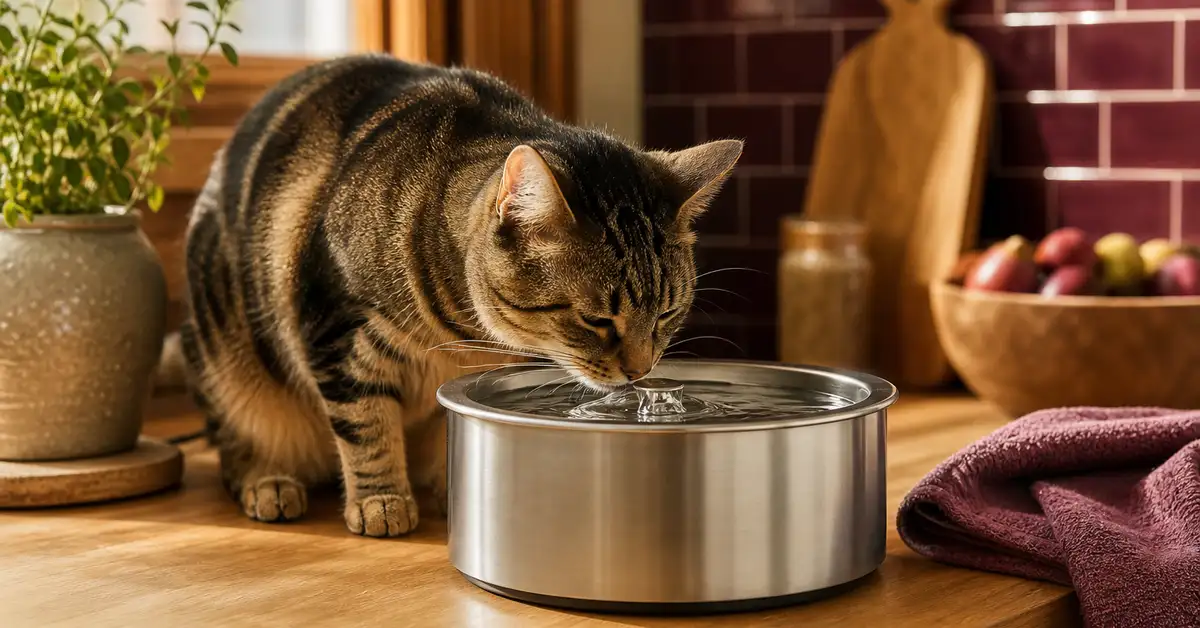
Updated for 2026. Cats evolved as desert animals with a naturally weak thirst drive, which is a big part of why so many drink less than they should from a still bowl. A circulating fountain often changes that simply by being more interesting: moving, oxygenated water that doesn’t sit stagnant and doesn’t make a cat’s whiskers brush uncomfortably against tight bowl walls.
The head term here is guarded — cats.com alone has tested 17 fountains, and Wirecutter, Forbes Vetted, and The Spruce Pets have all published their own “best overall” picks. Rather than repeat that framing, we’ve led with what those roundups underserve: multi-cat and large-capacity setups, honest noise-level extremes (with real dB figures where manufacturers publish them), and which fountains have filters you can actually keep buying five years from now. Below, 18 verified fountains across stainless steel, ceramic, and BPA-free plastic, checked against manufacturer or major-retailer listings.
How We Chose
We drew on manufacturer specifications (PetSafe, Petlibro, Catit, Pioneer Pet, PETKIT, NPET, Veken, ORSDA, iPettie, Uah Pet), major-retailer listings (Chewy, Amazon, Walmart), and established editorial testing (cats.com’s 17-fountain test, Business Insider, TheConsumersGuide’s stainless-steel roundup, Busypetparent’s apartment-focused guide) for context on where the market consensus sits — then deliberately looked past “best overall” framing toward the differentiators that actually change day-to-day ownership: material, pump noise (in dB where published), capacity against your actual cat count, filter cost and availability, and ease of cleaning. Every product below was checked for current availability before inclusion, and we ran a CPSC safety screen — no verifiable recalls turned up for any product featured here. Full policy: How We Choose.
Why Cats Prefer Moving Water
Cornell’s Feline Health Center notes that a typical cat should drink about a cup of water a day, and many fall short without some encouragement — a real problem in multi-cat homes where competition or stress can put one cat off a shared bowl entirely. VCA Animal Hospitals adds that healthy cats need roughly 4 oz of water per 5 lb of body weight daily, and that plain bowl water often just isn’t compelling enough on its own. Moving water taps into an instinctive association cats have between motion and safety from contamination — it’s why so many cats show more interest in a dripping tap than their own bowl. Wide, shallow fountain surfaces also sidestep “whisker fatigue,” the sensory irritation some cats get from their whiskers repeatedly brushing narrow bowl walls.
None of this means every cat needs a fountain, or that a fountain replaces a vet visit if you’re worried about your cat’s hydration or urinary health — we cover what the actual research says about whether fountains help, and when reduced drinking is a medical concern in more depth separately. What a good fountain reliably does is remove one common barrier to a cat drinking enough on a normal day.
Material, Noise, and Filters: What Actually Differs
Material. Stainless steel (look for 304/18-8 food-grade) is the most durable, non-porous, and dishwasher-friendly option, and doesn’t pick up plastic taste or odor over time — see our best stainless steel cat water fountains guide if that’s your priority. Ceramic is heavier and more breakable but offers a similarly hygienic, non-porous surface plus better aesthetics — just confirm the glaze is lead-tested (reputable brands publish this); our best ceramic cat water fountains guide goes deeper on that trade-off. BPA-free plastic is the common budget entry point; it’s fine, but scratches more easily over time and needs more frequent, careful cleaning to stay odor-free.
Pump noise. Quality pumps run around 30–40 dB, close to background household noise; the quietest smart models now advertise 23–25 dB. Cheaper pumps can run louder and less predictably, especially as water levels drop. If you have a light sleeper (human or feline) in the house, or a genuinely skittish cat, noise is worth weighing as heavily as capacity.
Filters. Multi-layer filters (mechanical mesh + activated carbon, sometimes ion-exchange resin) handle hair, debris, odor, and some water hardness. Replacement is typically every 2–4 weeks. Mainstream brands (PetSafe, Catit, Petlibro, Pioneer Pet) sell filters in accessible multi-packs through their own sites and major retailers; a few niche models use fountain-specific filter/pump housings that only fit one SKU, which is worth knowing before you buy if long-term filter access matters to you.
Transparency first: This guide contains affiliate links. If we’re enrolled in an affiliate program, we may earn a commission at no extra cost to you — it never affects how we research or rank. Read our full affiliate disclosure policy.
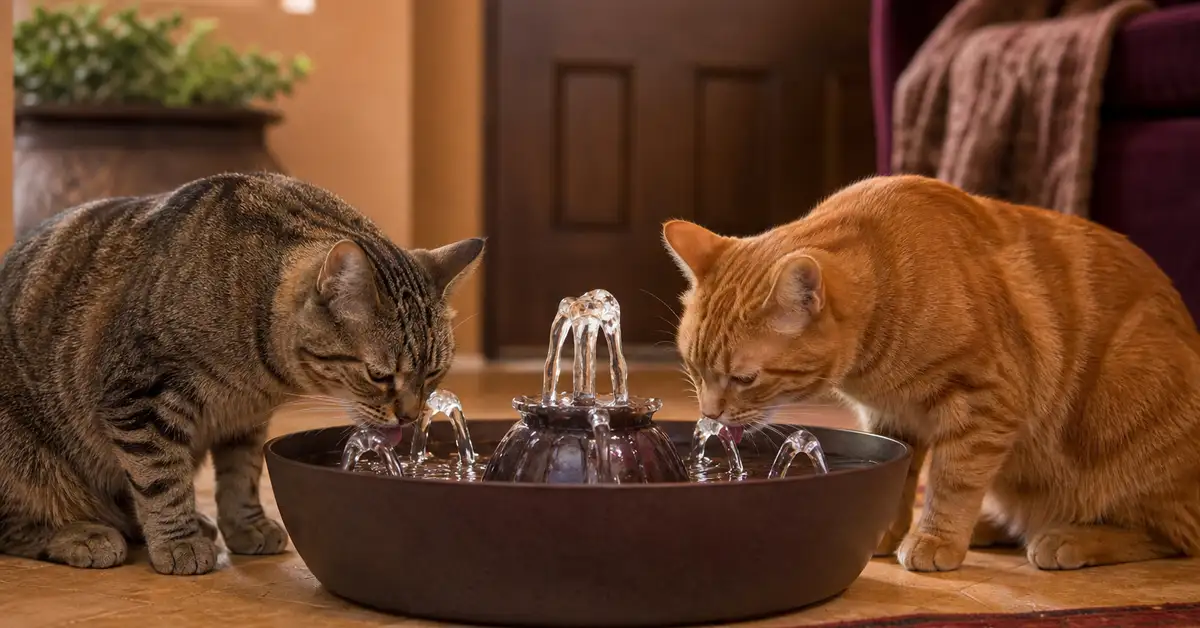
1. PetSafe Drinkwell 360 Stainless Multi-Pet Fountain (128 oz) — Best Overall for Multi-Cat Homes
What it is: A stainless steel fountain built around a central column offering up to five adjustable, 360-degree water streams around a circular bowl.
Best for: Three or more cats (or mixed cat/small-dog homes) that need several simultaneous access points without one cat guarding a single spout.
Pros: Genuinely designed for social access, not just capacity — up to five streams reduce crowding and dominance conflicts at the bowl; durable, dishwasher-safe stainless construction; widely available replacement filters.
Cons: Larger footprint than single-stream fountains; more components to disassemble for cleaning than simpler designs.
Price band: $25–75
Evidence: Manufacturer specifications (PetSafe); Petplace.
2. NPET 1 Gallon Stainless Steel Wireless Fountain (135 oz) — Best Large-Capacity / Least Frequent Refills
What it is: A cordless, battery-powered stainless fountain with a 1-gallon reservoir the manufacturer says can run up to ten days between refills.
Best for: Larger multi-cat households, or anyone who travels for a few days at a time and wants a real safety margin on water supply.
Pros: Very high capacity in stainless (non-porous, easy to clean); cordless placement flexibility away from outlets; widely available replacement filters through major retailers.
Cons: Bulkier and heavier when full; battery-operated design means periodic recharging in heavy-use homes.
Price band: $25–75
Evidence: Manufacturer specifications (NPET).
3. Petlibro 3L Stainless Steel Fountain (101 oz) — Best Quiet Multi-Cat Pick
What it is: A 304 stainless steel fountain with a 3L reservoir and a pump Petlibro and independent testers describe as operating around 30 dB — genuinely quiet for its capacity.
Best for: Two to three cats where noise sensitivity matters as much as capacity — light sleepers, timid cats, or apartments.
Pros: Rare combination of large capacity and near-silent operation at a price well below most fountains this size; rust-resistant BPA-free stainless tank; dishwasher-safe.
Cons: Relies on Petlibro’s proprietary filter cartridges (widely available, but brand-specific); fewer discrete streams than the Drinkwell 360.
Price band: $25–75
Evidence: Manufacturer specifications (Petlibro); TheConsumersGuide, 2026 stainless steel roundup.
4. Veken 95 oz Stainless Steel Fountain — Best Budget Multi-Cat
What it is: A 304 stainless steel fountain with BPA-free plastic components and triple-stage filtration, priced well below other stainless fountains near its capacity.
Best for: Two-cat households on a tighter budget who still want to avoid plastic at the drinking surface.
Pros: Genuine food-grade stainless at a budget price point; whisper-quiet pump; accessible replacement filters through the brand’s site and third-party retailers.
Cons: Fewer smart features and stream options than pricier stainless competitors; finish and pump longevity may be less refined than premium brands.
Price band: $25–75
Evidence: Manufacturer specifications (Veken).
5. PetSafe Drinkwell Platinum Fountain (168 oz) — Highest Capacity
What it is: A long-standing high-capacity plastic fountain with a nearly 5-liter reservoir, built for larger multi-pet households.
Best for: Bigger multi-cat or mixed cat-and-dog homes prioritizing maximum capacity over quietest operation.
Pros: Class-leading capacity reduces refill frequency significantly; long track record and broad filter availability; dishwasher-safe components.
Cons: Noticeably more audible than the quietest fountains on this list, especially as water levels drop and the pump starts drawing air; BPA-free plastic needs more diligent cleaning than stainless to avoid odor buildup.
Price band: $25–75
Evidence: Manufacturer specifications (PetSafe).
6. Pioneer Pet Raindrop Stainless Steel Fountain (60 oz) — Best for One or Two Cats
What it is: A widely recommended stainless “raindrop” design where water arcs from a raised arch into a lower basin, giving cats both a flowing stream and a still pool to choose from.
Best for: Single- or two-cat households wanting a durable, no-frills stainless fountain with a genuine editorial track record.
Pros: Fully dishwasher-safe stainless construction; quiet, unobtrusive operation; very affordable replacement filters sold directly by Pioneer Pet.
Cons: 60 oz capacity is comfortable for one to two cats but marginal for three or more without frequent refills.
Price band: $25–75
Evidence: Manufacturer specifications (Pioneer Pet); cited across multiple 2026 editorial roundups (TheConsumersGuide, Wirecutter-referencing coverage).
7. Catit Flower Stainless Steel Top Fountain (100 oz) — Best Multi-Stream Design
What it is: A stainless-topped evolution of Catit’s popular Flower Fountain, offering a bubbling center, petal streams, and a lower basin — three distinct ways to drink.
Best for: Cats who are picky about how water is presented — the multiple flow configurations let you find what a specific cat responds to.
Pros: Genuinely varied flow modes in one unit; dishwasher-safe stainless drinking surface; Triple Action Filter (mesh + carbon + ion-exchange) softens water and is sold widely through Chewy and Walmart.
Cons: The reservoir underneath the stainless top is still BPA-free plastic, not full stainless; 100 oz capacity suits one to two cats better than larger multi-cat homes.
Price band: $25–75
Evidence: Manufacturer specifications (Catit).
8. Catit PIXI Smart Stainless Steel Top Fountain (2.5 L) — Best Smart Pick for 1-2 Cats
What it is: A design-forward fountain with a suspended, fully detachable pump built to minimize vibration noise, plus LED status alerts and app connectivity.
Best for: Single- or dual-cat owners who want smart monitoring and near-silent operation more than raw capacity.
Pros: Pump suspension design meaningfully cuts vibration noise versus rigid-mounted pumps; whisker-friendly wide stainless top; auto-shutdown on low water.
Cons: Higher upfront cost than non-smart stainless options; 2.5L capacity is modest if you have three or more cats; wired (not battery) power.
Price band: $75–150
Evidence: Manufacturer specifications (Catit).
9. ORSDA Stainless Steel Fountain (67 oz) — Best Compact Stainless Pick
What it is: A 304 food-grade stainless fountain with a low-power (1W) pump and four-layer filtration, sized for one to two pets.
Best for: Single-cat or two-cat households wanting genuine stainless hygiene in a smaller footprint and at a lower price than bigger-name stainless brands.
Pros: Real 304 stainless at a competitive price; sub-30dB pump per manufacturer spec; visual water-level window; dishwasher-safe.
Cons: Less editorial track record than PetSafe or Petlibro; filter distribution is narrower (mainly the brand’s own Amazon storefront).
Price band: $25–75
Evidence: Manufacturer specifications (ORSDA), independently verified via current Amazon listings.
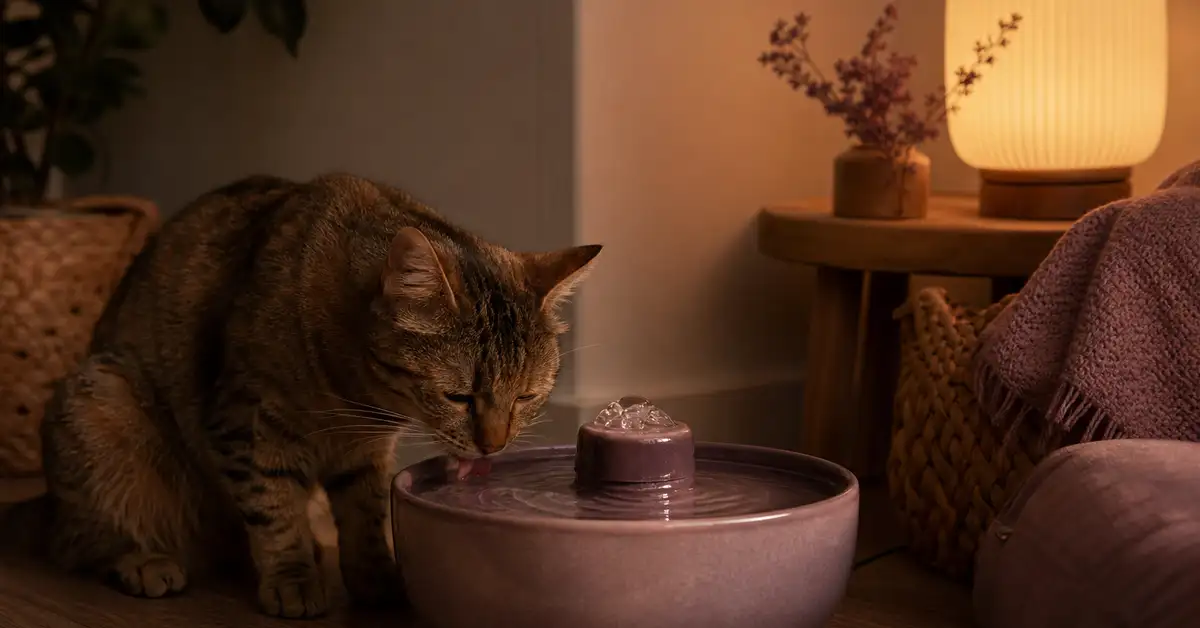
10. PetSafe Drinkwell Pagoda Ceramic Fountain (70 oz) — Best Ceramic, Two-Tier Design
What it is: A two-tiered ceramic fountain with two free-falling streams, giving cats of different sizes (or a cat and small dog) separate drinking levels.
Best for: Multi-pet homes wanting ceramic’s hygiene and looks, with genuinely separate access points to reduce crowding.
Pros: PetSafe publishes lead-content testing for its ceramic (well below US limits) — a real transparency point most ceramic brands don’t offer; quiet, durable pump; top-shelf dishwasher-safe.
Cons: Heavier and more breakable than stainless — needs a stable, low-traffic surface; 70 oz is comfortable for one to two pets, not larger multi-cat homes.
Price band: $75–150
Evidence: Manufacturer specifications + published lead-content data (PetSafe); Catlink, 2026 ceramic fountain guide.
11. PetSafe Drinkwell Seascape Ceramic Fountain (70 oz) — Best Value Ceramic
What it is: An open-bowl ceramic fountain with a soft central bubbling flow, positioned by Cats.com as a top budget pick among ceramic fountains.
Best for: Owners who want ceramic’s hygiene and quiet operation without the Pagoda’s two-tier complexity or price.
Pros: Genuinely close to silent in real-world use; wide, shallow, whisker-friendly open bowl; dishwasher-safe ceramic.
Cons: Same weight/breakage tradeoff as any ceramic fountain; 70 oz suits one to two pets best.
Price band: $25–75
Evidence: Manufacturer specifications (PetSafe); Cats.com, 17-fountain test.
12. iPettie Tritone Ceramic Fountain (71 oz) — Best Eco-Friendly Ceramic
What it is: A natural-ceramic fountain with dual filtration and a low-power (2W) pump rated for up to 10,000 hours of operation.
Best for: Design-conscious owners who want a ceramic option marketed specifically around eco-friendly materials and long pump life.
Pros: Long-rated pump lifespan; genuinely quiet operation (soft dripping sound rather than motor hum); non-toxic, easy-to-clean ceramic.
Cons: Filter distribution is narrower than PetSafe or Catit — mainly the brand’s own site and Amazon; 71 oz is a one-to-two-cat capacity.
Price band: $25–75
Evidence: Manufacturer specifications (iPettie), independently verified via current Amazon/Chewy listings.
13. Cepheus 360 Ceramic Fountain (70 oz) — Best Ultra-Quiet Ceramic
What it is: A round, 360-degree-access ceramic fountain marketed specifically on whisper-quiet operation, under 40 dB per manufacturer spec.
Best for: Noise-sensitive households wanting ceramic’s hygiene with drink-from-any-angle access.
Pros: Genuinely quiet pump; 360-degree access suits more than one cat approaching at once; quick-release parts for easier cleaning; top-rack dishwasher-safe.
Cons: Filter and pump housing are model-specific — worth confirming continued availability before you commit long-term; same breakage risk as any ceramic fountain.
Price band: $25–75
Evidence: Manufacturer specifications, independently verified via current Amazon listings; Petplace.
14. Catit Flower Fountain, Plastic (100 oz) — Best Budget Entry Point
What it is: The original, widely recognized Catit Flower design in BPA-free plastic, with the same multi-stream flower insert as the stainless-top version.
Best for: Owners testing whether their cat responds to a fountain at all before investing in stainless or ceramic.
Pros: Very low upfront cost; genuinely varied flow modes that many cats respond well to; widely available, affordable Triple Action filters.
Cons: Plastic needs more diligent, frequent cleaning than stainless or ceramic to avoid scratching and odor buildup over time; not fully dishwasher-safe.
Price band: under $25
Evidence: Manufacturer specifications (Catit).
15. Petlibro Dockstream 2 Smart Fountain (3 L) — Best for Hydration Tracking
What it is: A pumpless-tank fountain (a rotor moves water rather than a traditional submerged pump) with app-based hydration tracking, rated by the manufacturer at 23 dB.
Best for: Owners of senior cats, or anyone who wants a simple day-to-day record of how much their cat is drinking rather than guessing.
Pros: Among the quietest fountains available; separating water from electrical components via the pumpless design is a genuine safety upgrade; app alerts for intake changes and filter/water-level status.
Cons: Premium price for the capacity; app-dependent features add complexity some owners won’t want or need.
Price band: $75–150
Evidence: Manufacturer specifications (Petlibro); Cats.com, named overall best fountain.
16. Petlibro Capsule Automatic Fountain — Best Quiet Cordless
What it is: A cordless, battery-powered fountain with a translucent tank and built-in noise-insulation tubes, named a top quiet pick by Cats.com.
Best for: Owners who want cordless placement flexibility and near-silent operation without full smart/app tracking.
Pros: Genuinely quiet thanks to physical noise-insulation design, not just a low-power pump; visual tank monitoring; up to roughly three weeks per charge.
Cons: Modest 2-3L-range capacity suits one to two cats; plastic tank needs the usual more-frequent cleaning attention.
Price band: $25–75
Evidence: Manufacturer specifications (Petlibro); Cats.com, named best quiet fountain.
17. PETKIT Eversweet Solo 2 Smart Fountain (2 L) — Quietest On This List
What it is: A compact smart fountain PETKIT rates at or below 25 dB, with a visualization window, three flow modes, and app control.
Best for: Single- or dual-cat households where absolute quiet is the top priority.
Pros: Among the lowest published dB ratings of any fountain in this guide; auto-shutoff and LED alerts directly address the dry-running failure mode that kills pumps; triple filtration.
Cons: 2L capacity is not built for three-plus cats; proprietary filters and pump sourced through PETKIT or authorized retailers only.
Price band: $25–75
Evidence: Manufacturer specifications (PETKIT).
18. Uah Pet ZERO Wireless Fountain — Best External-Pump Safety Design
What it is: A cordless fountain that places the pump outside the water reservoir entirely, a design the manufacturer positions specifically around reducing electrical-shock risk versus traditional submerged pumps.
Best for: Safety-conscious owners and multi-cat households wanting up to ten days of runtime with genuinely low noise (sub-30 dB per spec).
Pros: External pump placement is a real, distinct safety approach, not just marketing language; six-layer filtration; cordless and leak-proof by design.
Cons: Premium price; proprietary filters may be less widely stocked than mainstream brands’ — worth checking current availability before buying.
Price band: $25–75
Evidence: Manufacturer specifications (Uah Pet).
Maintenance No Fountain Gets You Out Of
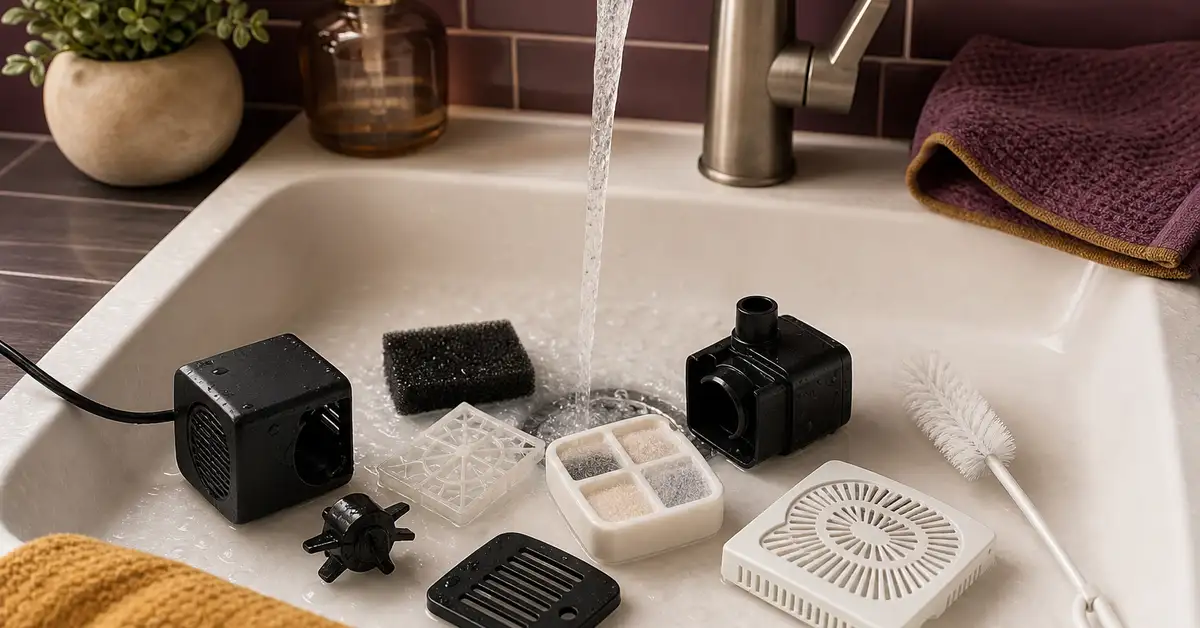
Whichever fountain you choose, the same rules apply: clean weekly at minimum (twice weekly in multi-cat homes or heavy use), replace filters every 2-4 weeks, and never let the reservoir run dry for long — pumps left running dry are the single most common way fountains fail early. Algae grows faster in direct sunlight, so keep fountains in shaded spots. We cover the full cleaning protocol, including how to handle limescale and pump maintenance, in our dedicated guide: How to Clean a Cat Water Fountain.
Frequently Asked Questions
Methodology & Sources
This guide draws on manufacturer specifications (PetSafe, Petlibro, Catit, Pioneer Pet, PETKIT, NPET, Veken, ORSDA, iPettie, Uah Pet), major-retailer listings (Chewy, Amazon, Walmart), veterinary sources (Cornell Feline Health Center, VCA Animal Hospitals), and established editorial testing (Cats.com’s 17-fountain test, Business Insider, TheConsumersGuide, Busypetparent, Catlink’s ceramic-fountain guide). Every product was checked against a manufacturer or major-retailer listing for existence and current availability before inclusion. Michael Probert, our author, is a longtime multi-cat owner writing from research and lived experience, not clinical or veterinary expertise — see our About page. We have no in-house veterinary reviewer. Full editorial policy: How We Choose.
Sources: Cats.com, Business Insider, TheConsumersGuide, Busypetparent, Catlink, Cornell Feline Health Center, VCA Animal Hospitals, Whisker, Petplace, and manufacturer/retailer listings linked throughout.
See the full cat gear guide for our other buying guides, including litter boxes, litter, and more.